Saturday, March 29, 2014

This Day In Gay Utah History March 29th

29 March 29-
1889 First District Court- Joseph Apodach was arraigned on an indictment charging him with the commission of a ““Crime Against Nature””; the offense having beem committed in the county jail in this city [Provo] on a boy named Vincent. Provo Daily Enquirer

1965-Gary Horning and Leon Dyer pleaded not guilty to 1st degree murder charges. The Weber County Sheriff Office apprehended the two men within 36 hours after the body of George Moriarty was found and both men gave statements implicating themselves to the crime. The pair will face trial June 8th. (04/01/65 Page C6 col.4 SLTribune)

1976 The US Supreme Court upheld the constitutionality of Virginia’s sodomy laws.

1984- “If You’re Gay- Wear Blue Jean Day” was sponsored by LGSU at the U of U. campus as part of the LGSU Gay Conference Week.  A drag show was held in the Union Theater at the U of U. Kelley’s Broadway Revue was the first openly Gay drag show on the University of Utah Campus.

1985-The Los Angeles Times announced its support of Gay rights and urged the US Supreme Court to take a stand on Gay issues.

1985: The first 3 day Desert States Lesbian and Gay Conference [aka the Desert and Mountain States Lesbian and Gay Conference] is held on the campus of UNLV, Nevada.

1985-Gay/Lesbian Conference Concludes Today at U Most people can look to their family,
Jim Kepner
their churches, or their culture to decide the age old question of who they are.  Gay people aren’t that lucky. “We grew up in heterosexual families,” Gay activist and historian James Kepner said Thursday at what has been a week long “Lesbian and Gay Conference ’85 at the University of Utah.  “Because being Gay wasn’t a everyday topic, Mr. Kepner thinks its important to look in the past to give us the key to who we are. “  “Reaching In” is the theme of the 2nd annual conference sponsored by the university’s Lesbian and Gay Student Union, conference director Michael Aaron said at a morning press conference.  “Last year
Michael Aaron
we directed the conference to Utah’s non Gay population and tried to explain what Gay and Lesbian people are about. Aaron said. “This year we have emphasized our program to other Gay and Lesbian people. Reaching In includes looking back at history and learning how to live Gay in a non Gay society, conference participants said. Utah has its share of homophobic residents who hate Gays according to Aaron but he thinks it is possible for a Gay person to lead a happy and fulfilling life here.  Growing up in Utah in a straight family, Aaron said he was involved in all the usual childhood activities including boy scouts, sponsored by the Mormon Church. He didn’t admit he was Gay until he reached college.  “I came out in college after I met someone Gay and had a half a year relationship,”he said. “That built up my self esteem to the point I could come out.”  Coming out to friends wasn’t so bad. Telling his family was far more difficult. Kepner who founded the International Gay and Lesbian Archives and now serves as its curator in Los Angeles lived in San Francisco as a young man in the 1940’s. “No matter how many gains we have made in the past 30 and 40 years, they are fragile, he said. “They can all be erased, almost overnight by massive scapegoating.”  Activities Friday at the Olpin Union Building include workshops on Lesbian rape, and safe sex with 10 a.m. workshops on Gay and Lesbian political awareness and artificial insemination. At 11 a.m. A 2 p.m. workshop on Gay and Lesbian History and 3 p.m. work shops on alternative religions and coming out to your family and friends.  The conference concludes with a candlelight vigil in memory of Gays who have died as victims of homophobic violence. It begins at 9 p.m. at the Union patio. (SLTribune B-8 )

1986-
Tony Feliz and John Butler 
Pamela Calkins, Lynn LeMasters, Tony Feliz, and Eddie Muldong of the Restoration Church arrived in Salt Lake from Los Angeles to organize the first branch of the church anywhere.  Pam Calkins, Lynn LeMasters, and Eddie Muldong stayed in the home of Ben Williams while Tony Feliz stayed with Bob McIntier. Pamela Calkins was interviewed for Concerning Gays and Lesbians as the first Lesbian to hold the Melchizedek priesthood. Elder Pamela Calkins lover, Lynn LeMasters was the first Lesbian with a non LDS background to convert to the Restoration Church and she held the Aaronic Priesthood.

1988 Unconditional Support was good tonight I think. We had a frank discussion about the bath houses and their being a sub culture of the Gay Sub Culture. Only about 3 people there said that they had never been to a bath house.  At first there were a lot of negative things said about the bath houses even by people who frequented them but by the end of the meeting we were able to be more objective and pointed out some positive aspects of them

1990-NGLTF director Urvashi Vaid interrupted a speech by President Bush,accusing him of a lack of action on AIDS.

1991- A Salt Lake City Police officer involved in an alleged off-duty gay-bashing incident has been suspended for 10 days without pay. The officer must also undergo a fitness-for-duty evaluation and will be transferred temporarily out of the patrol division, Chief Mike Chabries said Thursday. Representatives from the Salt Lake gay community say the suspension seems light, but are grateful the officer is being taken off the streets. The Feb. 23 incident involved Officer Roger Williams and John Martin, a gay Salt Lake City man who claims he was assaulted and called anti-gay names by two of Officer Williams' friends.  The two friends, Troy Perry and Scott Angus, have been charged with the assault and will be arraigned April 10 in 3rd Circuit Court. Officer Roger Williams, a Salt Lake City Police officer involved in an alleged off-duty Gay-bashing incident was suspended for 10 days without pay. John Martin, a Gay Salt Lake City man was assaulted and called anti-Gay names by two of Officer Williams' friends in Williams’ presence. The officer had to undergo a fitness-for-duty evaluation and was transferred temporarily out of the patrol division. Representatives from the Salt Lake Gay community say the suspension seems light, but are grateful the officer is being taken off the streets.

1993-The Utah AIDS Foundation’s 2nd Oscar Night Bash held at The Bay, 404 S. West Temple, Salt Lake City.

1996-A US federal judge temporarily blocked the discharge of 20-year-old seaman Amy Barnes, who was recommended for discharge because of homosexual conduct. The block was placed because of evidence that the "don't pursue" policy had been violated. According to Barnes, officers on board  the USS Simon Lake investigated her after she rebuffed the advances of a male sailor, then expanded the investigation to the other sixty women on board.

W Grant McMurray
1998- RLDS President W. Grant McMurray, the first president of the Community of Christ since 1830 that was not a direct descendant of Joseph Smith, Jr., takes a stand for gay acceptance during his World Conference in Independence, Missouri sermon. “We struggle today with the proper way of expressing the sense of calling and giftedness of persons with varying lifestyles and orientations, including those who identify themselves as gay and lesbian. We often do not speak openly of this issue. Tonight I will. Let me make a heartfelt plea with all of you, whatever your views on this difficult issue may be. In a world that cannot come to common ground on any of the medical, psychological, cultural, and social issues that swirl around this topic, the church cannot be expected to have those ready answers. But here is what we can expect—that every person who walks through our doors will be received with open arms.  We will listen to the life stories of each person who graces our fellowship and embrace them in love. On this there can be no compromise.”

Nicole Cline
1999 Gender Bender How Neal Cline resolved a lifelong dilemma by becoming Nicole Cline. By Carolyn Campbell Salt Lake City Weekly  Two hours after he and his wife of 16 years agreed to separate, Neal Cline sat on the bed at his newly rented apartment and vowed to resolve whether he was male or female. He rested his bearded face in his hands and thought about both his past and his future. As a young boy, he lay awake nights, hoping to arise the next morning as a girl. Since that time, confusion over his inner gender and outward anatomy continued to plague him. As a youth, he longed to feel appropriate in his body, and for years felt he was the only freak in the world. He recalls feeling "a first breath of fresh air" when he was 10 and his mother dressed him as a girl for Halloween. "It felt good--I wore makeup and a short dress borrowed from a teenage girl. I didn't want Halloween to end," Cline says confidently, in a voice not easily distinguishable as male or female. Cline says he soon discovered he felt at peace donning feminine apparel--on occasion a slip, a nightgown, a blouse and skirt. Yet this momentary calm was a brief respite in a life filled with inner turmoil. In everyday conversation, he'd pause to think how a man would respond before answering questions. For years, he chose vocations he hoped would wake up the masculine behavior he assumed should be inherent. Cline worked as an aircraft mechanic, graduated from the police academy and served in search and rescue operations. When his boss told him he was the most macho man he knew, Cline told himself he'd had a lot of years to perfect his role in this lifelong charade. But by 40, Cline was weary of lying about who he really was. "I was terrified, but determined to find the answer, good or bad. I decided I was going to be happy for the first time in my life," Cline recalled in a newer and higher version of the voice with which he once sang tenor. Although he was finding his occupational niche as a land-use planner, Cline stumbled through a maze of mental health advice about his gender confusion. Salt Lake County Mental Health originally assigned him to a male counselor. "I didn't know how to talk to a man about something so personal. I went for six to nine months and we got all of his issues resolved," Cline laughs sarcastically. After he saw the male counselor, he entered group therapy but found no better result. "If I can't tell some guy my deepest feelings, I'm not going to tell 10 strangers." After sitting silently through several sessions, he approached a female counselor. "I thought I would have found someone very understanding, but she couldn't crawl into the couch any deeper." Eventually though, the female counselor asked Cline specific questions. "Like what kinds of games did I like to play and how did I feel about my penis," he remembers. When Cline didn't meet the counselor's challenge to come back to the next meeting dressed as a woman, she was disappointed and referred him to a psychiatrist at the University of Utah. That day in the basement of the U. of U. Medical Center conjures up scary memories. "There were old pipes and a row of chairs that went off into the darkness. I remember thinking I was down here with the janitors and wondering how that could help me." The psychiatrist looked at his file and proclaimed that he wasn't ready for surgery--yet. "Back then, I didn't know about any kind of surgery. I envisioned someone opening my head to fix my brain, taking a plug from one outlet and putting it in another. I would have considered therapy a success if I left feeling appropriate in my body," Cline said. Eventually one counselor told him to simply wear unisex clothes. Feeling bewildered and even more convinced he was a freak, Cline returned to Salt Lake County Mental Health. Again he was referred to a male counselor, which left him feeling he was back where he started. Unsure what clinical path to take, he got a job with the Army Reserve as a technician working on helicopters. He married, more "out of cure than love." He recalls his mother telling him that he wouldn't need his own femininity, because he could take pride in his wife's. But only three weeks into the marriage, he told his wife about his gender confusion. "I said I felt peace when I wore women's clothes. It floored her. She was silent for a period of time. Then she said, let's keep it in the bedroom, taking me to mean I was interested in weird sex. I couldn't explain that this wasn't a sexual odyssey at all. After about a year, I still loved her, but I just didn't love her as a wife." The marriage became a good friendship and thriving financial partnership. But the two lived separate lives, he says, his voice trailing off as he recalls the unhappy time. "If we went anywhere, we arrived and left in our own vehicles. If we were home together, we would be in separate rooms doing different things."  Cline buried himself in a full-time job, another part-time job, and 16 to 18 hours of school. "Once I graduated, it was the beginning of the very end. Grasping at straws as I fell off the cliff, I bought a set of Kathie Lee Gifford marriage improvement tapes." But by then his wife wasn't interested in either the tapes or marriage counseling. Soon feeling he had nothing left to save, Cline asked for a divorce. Soon he had his own apartment. Although his marriage grew turbulent and then dissolved, his professional career remained solid. Karen Richards, Cline's former secretary--who also became a close friend--describes her former supervisor as a highly respected planner who was a perfectionist at work for Tooele County. "Neal was highly regarded. We'd go to professional seminars where the speakers they hired to attend would ask Neal for his opinion." Besides being very astute regarding land-use laws, her boss was also meticulous in dress, she said. "He had every hair in place, kind of greased back. Beard and mustache neatly trimmed. His shirts were always dry cleaned, pressed crisp. He always wore silk ties, cufflinks and dressed to the nines." Despite his outward perfection, Richards sensed her colleague was inwardly unhappy. Cline appeared depressed, as if hiding his real self. "He was trying to live the life he was expected to and just buried himself in his job," Richards concludes. She and Cline were at a land site when the subject of homosexuality came up. "I thought he was homophobic from what he was saying. Then he looked at me and said, "You just don't get it do you?" I'm going through a sex change." Cline matched his dedication at work with after-hours determination to resolve his gender issue. He began attending groups in the Salt Lake "gender community" where he met transvestites and transsexuals. Eventually, he became convinced he was one of an estimated 100,000 transgendered Utahns--both those who have and have not undergone sex change surgery.  In September, he underwent one of three planned surgeries. He also has undergone electrolysis and now takes hormone therapy. The hormones caused him to grow breasts and led to fat redistribution that made Cline's body shape conform more smoothly to female clothes. Because he had a wide vocal range as a singer and his Adam's apple did not protrude, he was able to rely on speech therapy rather than surgery to transform his voice to the mid-range tone he likes to refer to as asexual. Today Cline's voice sounds slightly breathy, but not raspy or deep. Somewhat broad shoulders and large hands are the only visible reminders that this person was once a man. He changed his appearance slowly at work, and took on an androgynous appearance for a long time. Richard's noticed that after Cline separated from his wife, his hands were no longer hairy. "They'd obviously been shaved. At the time, I didn't know why." In mid-1996, Cline began wearing women's slacks and blouses to work at the Tooele County courthouse, along with experimenting with makeup. "Most women have 10 years to learn mascara and eyeliner. I had six months. It was an act only mastered with great patience and determination," Cline says, flipping back her wavy, brunette shoulder-length hair. Besides eyeliner and mascara, she now wears foundation, lipstick and blush on her recently-smooth skin. "I was a good enough friend to tell Neal the blue eye shadow had to go," recalls Richards. Besides appearance changes, Cline also began using her initials rather than her first name at the office. But the final transition from Neal to Nicole occurred on the first day she wore a dress on the job. Donning a mid-calf, two-piece suit with tan and blue stripes on a spring day in April 1997, Cline felt very apprehensive about how people would perceive her. "I wanted to wear something tasteful and proper. I've always been conscientious about my clothes and didn't want to dress like a slut. I remember the first thing anyone said was, I guess you'll be using the women's restroom." The Tooele County courthouse women's restroom remains a bone of contention through which Cline's co-workers express opinions about her transition. Earlier this month, Nicole received a letter accusing her of insubordination for using the women's restroom. It's an issue she plans to contest. Richard's recalls that from the first day Nicole wore a dress, "Everyone was so curious and afraid. One man worried that if his wife used the restroom, Nicole might rape her. Someone else thought a guard should stand outside the door telling people to wait until she finished. And somebody asked what would happen if she peeked under the stalls," Richards said incredulously. As the story of Cline's sex change spread, visitors made special trips to the county courthouse to steal a look at her. Some co-workers and townspeople initially refused to speak to Cline. Richards remembers a day when she heard catcalls as the two of them visited the local 7-11. She wondered how her children, who were close to Nicole, would react after she told them Cline didn't want to be a boy anymore, but wanted to be a girl. "My son went into her office and whistled at her. He said, 'Woo, woo, you sure look pretty.' Nicole broke down crying," Richards remembers. To those who ask if it wouldn't be easier to simply disappear and assume a new identity, Cline's voice rises: "My research is acknowledged nationally. I've put too much effort into who I am. I couldn't be born 40 years old. In 40 years, I had all the lying I could take." Certain as Cline felt about maintaining the office status quo, the thought of pursuing a new romantic relationship remained puzzling after the divorce. "I knew I couldn't get back together with a heterosexual woman. Yet I wasn't gay per se and I felt gay men are attracted to other macho men. With a lesbian woman, I didn't have something total to offer. My sexual orientation is bisexual. A bisexual man? During my transition, the idea of getting back into a relationship was terrifying." Nonetheless, when he was still Neal, Cline met Marlene Smith, a slim, red-haired divorced mom of two. The pair became acquainted at a gender issues support group. At the time, Smith was finishing a liberal arts degree and dating a male cross-dresser. The two struck up a friendship. "Like me, she lived in Tooele. Too, she was someone who had been to the support group and knew that side of me. Back then, I really just wanted somebody to go kick a few rocks with," Cline recalls.  They went to a Halloween haunted house on their first outing together, and soon felt they'd always known each other. Smith remembers one evening when she was steeped in homework and Cline called and asked her to visit. Smith initially said no, but after 10 minutes of doing homework changed her mind. "I went to her house at eight and we talked until three in the morning. We discussed everything about what it's like to be a woman picking out clothes, makeup colors, men. It turned into a hen session. At the end of the night, we were just two women talking, and that's when I knew we were best friends." Although Cline still had a beard and was dressed as a man in black Levis and a pullover that night, Smith had previously seen him in a dress at the support group and fully understood that Cline was transitioning. Their first physical contact occurred later that night when Smith asked Cline to hold her hand as she walked down his icy driveway. They kept calling each other and getting together. Before the day Cline wore a dress to work, Smith called Cline "Neal" when accompanying her friend at professional seminars, but referred to her as "Nicole" at "safe" times. Neither can pinpoint a day when their friendly outings became dates. "We don't recall who said I love you or even who proposed first," says Cline. Marlene's 11-year-old daughter, Amanda, picked up on the romance first. "She asked when we would live together and when she could call me Mommy," Nicole says. After the relationship became romantic, the two discussed gender issues. "I made sure she had no thoughts that she would marry me now, then get me to go back to being a man," says Cline emphatically. Smith was previously married to a man and says she never pictured herself in a romantic relationship with a woman before meeting Cline. "I'd spent my entire life being heterosexual and had to really feel deep down in my soul to be able to overlook the idea of being called lesbian." If this relationship ended and she began another, it would probably be with a man. "But our situation is unique. Nicole has the softness of a woman and the strength of a man." When the office got wind of the unusual relationship, Richards says the most common question was "whether Marlene was really a girl." Today, Smith describes herself as "lesbian by default." When Neal became Nicole, the two stopped showing physical affection publicly. While Cline nearly always wears a dress or skirt and blouse, Smith is often attired more casually in a T-shirt and slacks, her long hair in a ponytail or drawn up in a bun. Despite their differences in appearance, it's obvious these are two women together. "After I no longer looked male at all, I missed the days when I could put my arm around her or hold her hand when we walked to the movies, but flaunting our relationship isn't what we're about," Cline says. Before deciding to become a family, the women had Smith's two children evaluated by a psychologist to be sure the relationship wouldn't be a detriment in their lives. They received a clean bill of health, Cline recalls. On March 22, 1997, both women carried bouquets, adorned their hair with lace-topped barrettes and wore calf-length silk and lace gowns when a minister joined them in holy matrimony at Metropolitan Community Church in Salt Lake City. They also exchanged matching diamond-studded wedding rings. Marlene Smith became Marlene Cline. In January, Nicole Cline was also wearing a dress when she presented her birth certificate and driver's license to the Salt Lake County Clerk's Office to apply for a legal marriage license. "The first time she came in, she showed her driver's license, which said she was a woman. We told her we couldn't issue a license for her to marry another woman," said Nick Floros, chief deputy County Clerk. When Cline responded that she was really a man, Floros required her to bring a certified copy of the birth certificate, indicating she was legally male. Cline also brought a copy of a court order indicating she could change her name from Neal to Nicole. "As long as she had not had her gender changed legally, which is permissible in Utah, she was legally entitled to her license," says Marlin Criddle, Cline's attorney. Criddle explains that when Cline previously applied for the name change, she also applied for a gender change, which the judge denied. "If the judge had granted the gender change, she wouldn't have been entitled to a marriage license."  "One of the implications of Nicole's unique situation is that it shows how arbitrary gender really is, and how arbitrary laws are that prohibit people of the same sex from marrying. There are institutions and religions who think that gender is an eternal characteristic, but experience in the real world disproves that," Criddle said. "Basically, in Cline's case you have two people trying to create a family and provide protection for their children. I can't understand why anyone would want to object to that."  While her attorney doesn't foresee complications, Cline becomes adamant at the thought of her marriage being threatened. "I have a legal right to be a human being and pursue happiness. If anyone tries to take this from me, I'll fight them to the ends of the earth." Actually, fighting is something Cline is less inclined to pursue since she became Nicole. "When I was full of testosterone, as a man, little things could set me off and I'd be mad for days. My driving in traffic was very impatient. Now when I get angry, and it takes quite a bit to get me angry, I try to accomplish something with that anger." Nicole hopes the environment at work remains congenial, too, although she says objections to her use of the women's restroom have escalated since her marriage to Smith. "While she declared herself as a male for purposes of a marriage license, it does not automatically follow that she should be treated as a male for use of the workplace restrooms," says her attorney. "She is in the process of becoming a female. Part of the standards and protocol for that include dressing and living as a woman and using the women's facilities." "I give some credit to Tooele County and Nicole's employers. Her transition occurred in a rural county and a conservative state, yet they were able to retain the services of a highly qualified planner," says Criddle. Today, Cline, Smith and Smith's two children live in a house they purchased together in Tooele. Aside from Smith's son's room, it's obvious that two women share the home. Roses abound on the curtains, antique lamps, in artificial bouquets and on the bathroom towels. The women own rose-print dresses and their recliners, too, are rose colored. Both Cline and Smith love decorating, cross-stitching and reading. Danielle Steel is Cline's favorite author, while Smith prefers Dean Koontz. They love to spend evenings having a cry-fest over movies like Philadelphia and The Crying Game. They also like to laugh at themselves and their unique plight. Nicole recalls how an insurance company originally questioned whether to provide coverage to her dependents, initially requesting that she sign an affidavit stating she was male. She refused to sign. "Their concern was unduly biased. Why would an insurance company, whose concern should be my dental and orthodontic health, be so concerned about my reproductive parts? I wrote them a letter saying that if any dentist tried to work on my sexual organs, I'd violently protest." During a lighthearted moment, Marlene kids her partner. "Come on, Nicole. You've got to miss the ability to stand up and pee." After mulling this thought over, Cline responded, I really can't say that I do because I so seldom did that. Even before, my natural inclination was to go in and sit down."  

1999 GLCCU Meeting of the Community Forum at the Center 7pm 539-8800  Each organization is invited to send at least one representative to the meeting  Individuals are invited to join the Forum as well

1999 WASATCH MOUNTAIN BEAR Wasatch Mountain Bears Cards at the Center 730pm

2001  Deseret News 2 gay students at Y. are forced to leave PROVO — Two students have been pressured to leave Brigham Young University for alleged violations of the LDS Church-owned school's strict moral code. Richard Escoto, 21, a sophomore from Los Angeles, was suspended for two semesters March 13 for reportedly visiting gay-friendly Internet chat rooms, going on same-sex dates and romantically embracing another male on campus, according to a copyright story in the Salt Lake Tribune. Matthew Grierson, 21, a senior from Dallas, told the Tribune that he was given the option of withdrawing or being suspended. He was confronted by BYU officials with the allegations one day before Escoto was reprimanded. Rather than face suspension for two semesters, Grierson, who was on a full academic scholarship, withdrew. Both men deny they violated the school's honor code, which prohibits students from engaging in "homosexual conduct." They say they were not sexually active and therefore did not warrant discipline. Escoto said the school relied on the false testimony of other students. Grierson admitted to holding hands with a man in a public place but nothing more. Michael Smart, a BYU spokesman, declined to release specific information about either student. Federal privacy laws prohibit the school from releasing details about individual cases of student discipline. It is unknown how many students — either heterosexual or homosexual — are suspended or expelled for sexual misconduct. Smart said BYU does not keep statistics on violations that occur at the university. Among other things, BYU's honor code prohibits students from living with members of the opposite sex, consuming alcoholic beverages, smoking, taking drugs and having premarital sex. Smart told the Deseret News that 2 percent to 3 percent of BYU's 30,000 students are referred to counselors at the Honor Code Office each year, mostly for minor infractions of the honor code involving how students dress and groom. Gay students may attend BYU if they abide by the teachings of the LDS faith — which denounces gay relationships — and "as long as they don't act on the same-sex attractions," Smart said. Smart said the honor code is an "outgrowth" of the principles of the 11 million-member church. Students should be familiar with both the teachings of the church and honor code requirements when they arrive at the school, he said.
Faculty aren't exempt from pressure to leave if they publicly acknowledge their sexuality. Thomas J. Matthews, who taught at BYU for five years, left BYU in 1996 to join Weber State University's faculty. At the time, Matthews said he was not told to leave but felt like he needed to move on.


  • BYU Brass Suspend Two Gays Salt Lake Tribune  Richard "Ricky" Escoto, a gay Mormon and Brigham Young University student, always considered the LDS Church's stance on homosexuality to be benevolent, even accepting. I figured as long as I remained chaste the church would welcome me," he said. But Escoto has found it is not that simple. BYU, owned by The Church of Jesus Christ of Latter-day Saints, recently suspended Escoto under the university's honor code for violations related to disputed allegations of homosexual conduct. According to Escoto, as well as another gay BYU student suspended two weeks ago, being gay without engaging in homosexual activity may be permitted at the Provo school, but students risk being sanctioned for even talking about same-sex attraction or associating -- however chastely -- with other gays or lesbians. On March 13, the school suspended Escoto, a sophomore from Los Angeles, Calif., on four counts: that he received gifts from other men, visited gay-oriented Internet chat rooms on his home computer, was seen on "dates" with at least three different men and was found "making out" with another male in his apartment. The two-semester suspension begins April 25. Escoto, 21, disputes the allegations. He says the school has "no proof of anything," but instead relied on the false testimony of "bigoted" roommates.  His only crime, he says, was confiding his "issues with same-sex attraction" to a roommate with whom he was particularly close. Word quickly got out among the other roommates who turned him in to BYU's Honor Code Office, he said.     BYU's strict honor code, which must be signed by all students, lists "homosexual conduct" among other prohibitions under the heading "sexual misconduct." The reference to homosexuality, added in the late 1990s, doesn't elaborate. "The Honor Code is not a laundry list of do's and don'ts," said Carri Jenkins, BYU spokeswoman, who confirmed Escoto's suspension but declined to discuss details. "It's not going to go through and spell out everything involved. Students have the maturity to decipher that and listen to what church leaders are telling us."  Less than 2 percent to 3 percent of BYU's 30,000 students are referred to the Honor Code Office annually, most for minor dress code violations. Jenkins would not say how many referrals are related to homosexual conduct or result in suspensions.  "But it's not many," she said. Contrary to what some students believe, "There are no sting operations. No one is going out and asking students their sexual orientation. It's not something they ask when they apply to the university," said Jenkins, referring to news stories in the '60s and '70s about campus police spot-checking gay dance clubs for license plates of BYU students, or posing as gay men and soliciting sexual favors from male students.  The school's policy follows church guidelines that differentiate between homosexual tendencies and homosexual acts, Jenkins said. There is some confusion among students, however, about what precisely constitutes a homosexual act.  "They don't spell it out in the honor code. I just thought it meant no sex," said Matthew Grierson, 21, who was told March 12 to either withdraw from the university or face a two-semester suspension. Grierson, a senior from Dallas, Texas, who was on a full academic scholarship at BYU, withdrew. Grierson said he was reprimanded for allegedly kissing a man on campus and holding a man's hand at a Provo mall. He admitted only to the latter. Escoto submitted a formal denial of his roommates' allegations and included character reference letters from fellow students and a former BYU professor living in California.   But in the end, he said, school officials took his roommates' word over his.
  •  
2003 Dear Mark [Bowman], This is Hugo Salinas-Olaiz, an Associate Director with
Jay Bell 
Affirmation: Gay and Lesbian Mormons. We are very impressed with the LGBTRAN website and fully support your initiative. Let me mention a couple of times that might be of your interest: 1. We are currently in the process of creating a new website that will include a section entirely dedicated to celebrate our history and remember our dead. I will send you more information when the new site is up & running. 2. As you know, we started a collection in the Marriot Library in the University of Utah. Jay Bell is our archivist, and he helps coordinate the process of making donations to the library. We intend to scan and keep copies of some of the materials before making the donation and post them on our website. 3. We have a few pioneers of our own, and we are planning to send you the information so that you can post their bios in your Pioneer Gallery. Thank you for your efforts to preserve our history, Hugo Salinas-Olaiz

2005 USU same-sex benefits proposal suffers big setback By Arrin Newton Brunson Salt Lake Tribune LOGAN - Supporters of a "Domestic Partner Benefits" proposal at Utah State University were dealt a blow Monday afternoon. Still, they are not bowing out of what is sure to be a tough fight for everyone involved. "It's absolutely not over," said sociology professor Patricia M. Lambert just hours after a meeting where a "Domestic Partner Benefits" proposal was shot down. "It's by no means over." Proponents of the proposal have been fighting for a year to provide to partners of homosexual employees the same benefits that are given to legally married employees. But USU legal counsel Craig Simper told approximately 150 employees at the Faculty Forum on the Logan campus that Utah's Amendment 3, approved by popular vote in November and effective Jan. 1, clearly defines marriage as a legal union only between a man and women. "No other domestic union may be recognized as a marriage or given the same or substantially equal legal effect," he said. Although the legal validity of laws just like Amendment 3 is being challenged beyond Utah's borders, Simper made it clear that this is not a battle his employer wants to fight. "Utah State University does not want to be the test case and does not intend to be the test case," Simper said Monday afternoon. Lambert, a member of a USU ad hoc committee that has amassed a wealth of information in support of domestic-partner benefits, said her group is not challenging Utah's legal definition of marriage. "There are different views on Amendment 3 than Craig Simper presented," Lambert said, citing support from Gov. Jon Huntsman Jr., whose election campaign boasted plans to strive for equal rights to same-sex couples, as well as Sen. Gregory Bell, proponent of failed Senate Bill 89 to extend benefits to domestic partners. "We're not proposing to marry people. This is a matter of benefits." Lambert said USU added sexual orientation to the list of reasons not to discriminate against people in the affirmative action/equal opportunity policy in 1993. For years, USU employees have been told that the benefits package is a measurable part of employee salaries. "But if not everybody has the same access, than not everybody is being paid the same," Lambert said. Failure to offer benefits discriminates against homosexuals, a fact many universities and private companies are recognizing and remedying, Lambert said. "We also probably limit our [hiring] pool because there are a lot of people who feel that this is a discriminatory practice," she said. Monday's USU Faculty Forum was open to faculty, professional and classified employees, but not the press. Faculty Senate President Janis Boettinger said the large crowd probably wasn't at the meeting to delve into the controversy. "We've opened it up [Faculty Forum] to all faculty members in the past, but this is the first time we've done it for all employees," Boettinger said. "I think the big draw was the discussion about proposed changes to health benefits - [co-payments and premiums]." Still, Boettinger said, the same-sex benefits discussion did draw comments. "There are some faculty who still think that we should pursue providing same-sex benefits, but, in terms of Faculty Senate at Utah State University, we are a state institution and we basically need to uphold the state constitution," Boettinger said. She said Faculty Senate President-elect Derek Mason agrees. "We really can't, at this time, take this any farther. There's really nothing we can do right now until there's a challenge," Boettinger said.
  
2005  Letter to Daily Chrony  Letter to the Editor: The LGBT Center should fire its advertising manager Editor: As I walked past the Union on March 22, I saw the simple white signs with black lettering that relate a short message, a telephone number, and a room number of the Union. For me, the signs presented a couple possible meanings. What am I supposed to feel when I read a sign that says, "Gay is Real" or "Bisexuals do Exist" or "Lesbians are Real?" One possible message: Like aliens and Bigfoot, homosexuals and transgender people do exist! Come see them on exhibit in room 317. Needless to say, the ambiguous signs lead to confusion. Although the assumed intent of the signs is to make the public aware of these individuals, I can't help but chuckle at signs that resemble headlines in National Enquirer like, "Elvis lives!" "Child born with five heads!" and "Aliens do exist!"  Even though I don't treat homosexuality and bisexuality lightly, I have to admit that I laughed out loud as images of smashed wheat fields, UFOs and giant apes flitted through my mind. Rachel Miller Freshman, History

2007 Bullogh Lecture Series- Professor George Chauncey When: 29 March Thursday, 4 pm Where: 1110 LNCO Auditorium (very close to OSH Hall) Uiversity of Utah Campus. The upcoming Bullough Lecture will feature 
Professor George Chauncey, a social and cultural historian of the United States whose research and teaching focus on urbanism, gender, sexuality, subjectivity and social movements in the 20th century. Best known for his award-winning book Gay New York: Gender, Urban Culture, and the Making of the Gay Male World,1890-1940 (1994), He is also the author of Why Marriage? The History Shaping Today's Debate over Gay Equality (2004) and co-editor of Hidden From History: Reclaiming the Gay and Lesbian Past (1989) and two special journal issues on gender, sexuality, and transnationalism. Professor Chauncey will be speaking on his new book, The Strange Career of the Closet: Gay Male Culture and Politics from the Second World War to the Gay Liberation Era.

2010 Census has 20/40 gaydarIn Section: News Blog » Posted By: Jesse Fruhwirth Salt
Jesse Fruhwirth
Lake City Weekly The Census survey doesn't ask, "Are you gay or straight?" but it will be counting (some) queer Americans. That's some amazing gaydar. How will they do it? With help from Equality Utah Executive Director Brandie Balken, we probe the Census for its inclusion of the LGBT community. 
(all answers are paraphrased) 
Q: How is the U.S. Census Bureau going to count queers if the form doesn't ask who is queer? 
Brandi Balkin
A: The 2010 Census will be counting not just married couples, but also unmarried partners. Because the form collects gender data on each individual in a household, one can extrapolate how many gay and the lesbian couples respond to the survey. Individuals of the same gender who indicate they are married or unmarried partners are presumed to be gay or lesbian. 
Q: Will the Census count lesbians and gays who are single or those who do not live with their partners? 
A: No. The Census will "count" those people, but it will not detect them as lesbian, gay or bisexual. 
Q: Will the census count transgender Americans 
A: No. It will count those individuals, but only as one gender or the other--whichever the individual chooses--but the Census is not designed to count how many Americans have transitioned, or are transitioning away from their received gender. The Census form only provides male and female as gender options, so choose whichever seems more appropriate. Q: Why doesn't the Census include more dynamic monitoring of the LGBT community? 
A: The Census has been slow to add more categories in the racial and ethnicity categories as well. The addition of new racial and ethnicity options has been a slow evolution and likely the addition of gender and sexuality options will be as well. Hopefully there will be more progress by 2020, when the next Census is taken. 
Q: Why do we care? What's the value of having the Census count the LGBT community? 
A: It helps so that people understand there are queer individuals in every community.

2014 Op-ed: Marriage studies are tangled web of deception BY CHRIS WANGSGARD “Oh, what a tangled web we weave, when first we practice to deceive.” — Sir Walter Scott In its appellate brief to the 10th Circuit in the same-sex marriage case (Kitchen v. Herbert), Utah claimed that “ ... same-sex parenting arrangements are less effective than married biological mothers and fathers in producing positive outcomes in the lives of their children.” The sole authority Utah relied on to make this representation to the court was a study by a sociologist, Mark D. Regnerus: “How Different are the Adult Children of Parents Who Have Same Sex Relationships: Findings from the New Family Structures Study” (2012). On March 21, the U.S. District Court in Michigan decided a same-sex marriage case like Utah’s
pending case. In that case, Mr. Regnerus testified as a witness for the state of Michigan, claiming that his ‘New Family Structures” study, relied on by Utah in its 10th Circuit appeal, justified state constitutional provisions banning same-sex marriage. Having heard Dr. Regnerus’ testimony about his “study,” Judge Bernard Friedman ruled: “The court finds Regenerus’ testimony entirely unbelievable and not worthy of serious consideration.” Judge Friedman, having reviewed the history of the “study,” ruled that it “... was hastily concocted at the behest of a third-party funder,” which had declared in advanced that it “was confident that the traditional understanding of marriage will be vindicated by this study.” Judge Friedman’s ruling states: “While Regnerus maintained that the funding source did not affect his impartiality as a researcher, the court finds this testimony unbelievable. The funder clearly wanted a certain result, and Regenerus obliged.” The Regnerus’ “study” is the worst kind of junk science. Survey participants were asked whether either of their parents had ever been involved in a “romantic relationship” with a person of the same sex. Regnerus labeled the 248 participants who answered “yes” as children of same-sex relationships. Judge Friedman concluded this process had identified only offspring of failed heterosexual unions, thus proving nothing about same-sex parenting. Only two of the 15,000 survey respondents reported living with a same-sex couple for their entire childhood. Mr. Regnerus admitted he found these two individuals well adjusted. In short, the Regnerus “study” compared the children of stable families and those of unstable families, but labeled the unstable families as same-sex families. The facts regarding the Regnerus “study” have now been adjudicated. Judge Friedman performed his constitutionally assigned role. He heard the evidence, measured the credibility of the witnesses, and decided the facts. He recorded his findings and conclusions in a written decision. Those wishing to label his decision “liberal judicial activism” will have to find a way to deal with the fact that Ronald Reagan appointed him to the federal bench. On April 10, Utah’s attorneys will stand before the judges of the 10th Circuit in Denver. Those judges will have read Utah’s brief. They will know that Utah, through its Attorney General’s Office, has represented that same-sex parenting arrangements have been proven to be less effective than traditional marriages in producing positive outcomes in children’s lives. Those judges will almost certainly also have read the Michigan ruling. Federal judges take truth seriously. Utah’s attempt to misrepresent junk science as fact will spoil the credibility of Utah’s case — as well it should. Chris Wangsgard is a Utah attorney with more than 40 years of litigation experience.

2017 Men Who Move held a History Panel in the Sprague Library in Sugar House. "Had a lively time as a panelist at a Men Who Move event where I was asked to speak along with Garth Chamberlain and Connell O'Donovan about the Gay community from the 1980s and 1990s...I saw an old friend I hadn't see in 20 years there as well as a bunch new friends... A young man Peter Moosman who came up to me and asked if I remembered him...lol he was one of my former student from Orchard who now works at the community college"...Memoirs of Ben Williams.
Chuck Whyte wrote "Thank You very much Terry Gillman for having the History Panel this evening at the Sugar House Library. It was so great to remember the community activity's and most of all the people. Too many of our friends are no longer physically with us. The 3 people on the panel were GREAT. Connell O'Donovan ,Garth Chamberlain, Ben Williams. Thank you so much for TRUTHFULLY telling OUR COMMUNITY'S history of the 80s and 90s. I was personally touched when 2 organizations that are very dear to me, were given credit for their community involvement.....Those being The Gay and Lesbian Community Council of Utah and The Royal Court of the Golden Spike Empire (RCGSE) Thank You again for an evening that I will; indeed cherish."

2020 List of 2020 Kristen Ries Award Nominations by Kent Frogley "Hello everyone, While we are all navigating this unprecedented time, staying safe, and doing our part to flatten the curve, allow me to give you one more thing to think about. Attached are the nominations for the 2020 Dr. Kristen Ries Community Service Award presented in the order they were received. Please review the attached and reply to me with your vote on who should be recognized this year. Please reply by Sunday April 5, 2020 to this email address. When and how this award will be presented is obviously affected by how things play out in the next weeks to be optimistic, or months to be less optimistic.  The Utah Pride Center is committed to taking appropriate steps to keep our community safe while also keeping our community involved and engaged. If you have any questions about the nominations please contact me.  On behalf of the Utah Pride Center thank you for all you have done to serve our community and all you continue to do.  Stay safe. Kent"
Cori Agarwal

Cori Agarwal M.D.
Cori Agarwal is the driving force behind University of Utah's Transgender Health Program. She saw the need for coordinated, competent, and affirming care for trans and gender diverse patients and advocated for this program to exist. It took 3 different occasions in front of hospital leadership before they acknowledged this same need for a program. We now offer 8 specialties, with over 40 gender affirming providers. Patients travel from out of state because this program is the only comprehensive program that exists in the surrounding states. She is continually advocating for our community outside of her clinical duties from speaking with legislators when anti-trans legislation arises to meeting with insurance payors too educate them on the medical necessity of gender transition services. She is leading this program with community in mind every step of the way.

 Sean Childers-Gray

Sean has been a leader and board member in both the Imperial Rainbow Court of Northern
Sean Childers-Gray
Utah and Ogden Pride. His tireless work has raised thousands of dollars for non-profits as well as supported LGBTQ Utahans through social activities, as well as community service.  Sean is also paving the way for transgender Utahans to be able to legally change their gender marker by fighting with Angie Rice up to the Utah Supreme Court. 
And personally, he's been an asset and advisor as my son has transitioned and he or I have had questions about prescriptions, surgeries, etc.  Sean is truly amazing and gives so much to our community!


Robert Lopez
Roberto Lopez

He has done so many incredible things for our community, he is invested in our youth. He has 3 beautiful smart children that he always puts first. Roberto had open heart surgery less than 6 weeks ago and his number one priority has been getting back to doing his work with the community. I cannot think of a better more deserving person.


Allison Gayle Phillips Belnap

Community Service takes many forms and Allison Phillips Belnap takes her advocacy and her voice seriously. Not only does she continually share her story publicly, (Tribune Op-Ed regarding stigma, leaving a job as a Dean at BYU's law school, speaking on panels and meeting with officials to change policies and also the humanity of community groups), she lives a position of mentorship.
Allison Phillips Belnap
Her law firm recognized her efforts for LGBTQ people appointing her to a task force nationally and local SLC LGBTQ citizens and students regularly call her for assistance,
mentorship, and advice. Allison uses her position, her background, her empathy and compassion to help others consistently and thoroughly. She listens, she speaks out, she connects, and she writes. She courageously "came out" herself and immediately became a voice of the people. Most notably this year she sponsored the PRIDE flags in Heber City, Utah launching a small-town conversation and creating a ripple effect of flags in Park City and St. George. Her efforts heal people individually and raise awareness civically and culturally. Her expertise is utilized to push understanding and to engender love. Largely behind the scenes of change, she is making the LGBTQ life easier, more transparent and kinder in Utah.
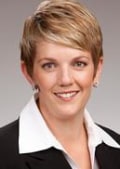


Karrie Galloway

Kerrie Galloway
Planned Parenthood has become the largest provider of STD testing and treatment in the state of Utah under Karrie Galloway's leadership of the organization.  Karrie has been with PPAU since 1981 and annually PPAU provides over 32,000 STD tests and serves over 11,500 teens and families with medically accurate responsible sex education to ensure our community stays safe.  We also have a variety of education programs including an educator training called Safe at School which last year trained over 1,100 current and future educators about how to make classrooms safe for LGBTQ+ students.  Planned Parenthood Assoc. of Utah spends roughly double the amount of other PP affiliates on education because the state does not provide these services in the schools.  Of the nearly 47,000 patients PPAU sees annually 20% are male - males seek services at PPAU because of the lake of state provided STD testing and treatment services and the lake of other safe spaces for the LGBTQ+ community to receive care.  All of this has taken place under Karrie's decades of service at PP.  Providing care for the LGBTQ+ is a priority for Planned Parenthood in Utah.

Gina Crivello

Gina Crivello, founder of Mama Dragons. In 2013 Gina Crivello tried to start a gay straight
Gina Crivello 
alliance club at the school where she worked. She ran into all kinds of roadblocks and quickly became aware of the root of the problem. So she began her own blog. Many people began sharing their feelings with her through her blog. She also got many responses through instant messaging. soon she brought people together. “They didn't mind the cramped quarters because it was filled with unconditional love and safety,” Crivello said. “No lurking ward members. No tattletales. No judgement for un-sanitized expressions of feelings.” Crivello, who started in dragons as a fully active member of the LDS Church, has since asked for her name to be removed from the records of the LDS Church. She added, “Mama Dragons doesn’t want to destroy the church, we want the church to stop destroying our kids.” By the end of 2013 Crivello said she saw a need for these conversations to continue and set up a Facebook group for them and set the privacy setting to "secret" — not because she didn’t want anyone to know about the group, but because they needed an emotionally safe place to share. “It quickly 
became clear that Mama Dragon has to somehow be a part of the (groups) title,” Crivello said. Just two years later, there are more than 725 members of Mama Dragons from Australia to Canada. Women who want to join are vetted to make sure their intentions and needs match the mission of the group. Several locations like in Seattle have started their own local groups and even have in-person get-togethers. Sometimes we can help in person. Sometimes it’s through social media, texts, emails or phone calls. We have attended same-sex weddings and celebrated with the new couple. We have buoyed each other up when unjust things have happened to our children. We have met with some of the highest leaders in the LDS Church, asking for more visibility and promotion of the church-sponsored Mormons & Gays website, and increased compassion and inclusivity in their talks about LGBTQIA+ people. We have met with our local ward and stake leaders. We have attended funerals of gay suicide victims and mourned with their bereaved families. We have written articles about our experiences that have helped to open the eyes and hearts of the people who read them. We have done podcasts, press interviews, documentaries, YouTube videos, etc. in the hopes of furthering our message of unconditional love, full acceptance and equality, as well as education of church leaders and members. We work hard EVERY DAY to make things better for LGBTQIA+ people, especially the youth. They are our most vulnerable. And unfortunately, the most invisible. Mama Dragons is a thriving organization today that continues to help break down barriers while supporting our youth.

Matt Bryan M.D. 
Dr. Matt Bryan

Dr. Matt Bryan deserves the Kristen Ries award because of his dedication to providing thorough, compassionate and comprehensive medical care to the LGBTQ community, and for investing his time to make changes to increase Intermountain Healthcare (IHC)’s capacity to deliver high-quality healthcare to LGBTQ patients. In 2015 when Dr. Bryan arrived at IHC as a primary care internal medicine physician, he quickly realized there was a critical shortage of healthcare providers in Utah who were trained to care for LGBTQ patients. Thus, he limited his new patients to those who identify as LQBTQ and began further developing his own expertise in LGBTQ medicine. He has attended numerous professional development conferences and spent countless hours learning to manage the unique medical needs of this community. He is the only primary care physician within IHC whose practice is solely dedicated to the LGBTQ community and his efforts are saving the lives of our LGBTQ citizens. Because of his efforts to expand access to compassionate and thorough healthcare for the LGBTQ community, he was appointed the first Associate Medical Director for LGBTQ Medicine for IHC, a role that has allowed him to expand IHC’s capacity to serve the LGBTQ population. He is leading the development of Project ECHO, which allows an interdisciplinary team of healthcare providers (e.g., primary care, pediatrics, psychologists) to communicate and develop into the LGBTQ-competent network our state desperately needs. In 2018-2019, he worked with the Office of Diversity, Equity, Inclusion, and Care transformation teams to create “preferred name” and “preferred pronouns” tabs which are entered into the patient’s medical record so LGBTQ patients are not misgendered and mistreated by staff and providers. Dr. Bryan is also currently serving on the Utah Department of Health’s HIV prevention planning team and supporting statewide efforts to reduce the incidence of new HIV infections. In his role as Associate Medical Director for LGBTQ Medicine, Dr. Bryan spends countless hours, outside of his own busy clinic schedule, creating presentations for clinicians and staff, medical students at the University of Utah, and nurse practitioners and physician assistants, to teach them about the health issues facing the LGBTQ population. He is also exploring innovative ways to improve LGBTQ health by creating automated order sets for physicians treating LGBTQ patients, exploring telehealth opportunities for LGBTQ patients, and engaging leaders in medical and surgical specialties to improve training of their providers as well. A fellow Intermountain Physician said, “What he does is innovative and requires a shared knowledge base, empathy, creativity and an open mind. He can make an (ignorant) provider feel comfortable with LGBTQ health issues by understanding that person, knowing where their knowledge gaps are, and educating them so all our patients will get better care. It is a skill found only in the best teachers I’ve worked with in my medical training. His unique skills and knowledge set are invaluable to me. I know he can connect with providers of all ages and backgrounds, and that makes him a great leader in his field”. There is no question that Dr. Bryan will use his clinical and leadership roles to continue his efforts to ensure that LGBTQ patients have access to appropriate and compassionate care within IHC and beyond. Dr. Bryan has motivated us all to become more compassionate humans dedicated to advocating for equality for all the patients we are privileged to serve. He is a true role model for selflessness, and all of us lucky enough to be friends, colleagues, family, or patients of his, benefit in countless ways from his dedication and passion. The future of LGBTQ medicine in the state of Utah is brighter because of his efforts

Friday, March 28, 2014

This Day In Gay Utah History March 28th

.March 28

1888 He Has Skipped- Joseph Mullett is gone and his bondsmen are figuring to meet the $1000 bail which he gave to appear for examination this afternoon and which was declared forfeit. Mullett will be no loss to this community but the people among whom he takes up his abode had better look out for him and teach their little boys to be shy of him. The charge which he has departed to escape punishment for is the ““Crime Against Nature””. It is understood that he has sufficient property to cover his bonds and that before he obtained securities, arrangements were made for their reimbursement in case he did not again make his appearance in court. Deseret News  (Ex Mormon Bishop Tom Taylor now has someone to sympathize with. Mormon Teacher and Priest Joseph Mullett has been arrested for padephilia (sic) a serious crime against nature and was bound over in$1000 to appear before Justice Pyper next Tuesday. Mullett has practiced this crime for several years but has kept it so quiet that he only just now has been detected. City Police Court SLTribune 3/16/1888)  Joseph Mullett came to Salt Lake City in 1868 as part of the Chester Loveland Company. The roster said he was married and had two children. The 1880 Census lists Mullett as 40 years old born in England and a Tanner by trade.  By 1900 Joseph Mullett is listed living in Salt Lake City again at 174 West South Temple Street where he was listed as a lodger with two other Englishmen in their 5o's and 70's. He was listed as still married and born November 1838 in England. His occupation was a farm laborer. The last census he is located in is the 1910 where he is living in Bluffdale age 71 years old and working as a church janitor. Mullett had a run in with the law again in 1912 charged again with an assault with the intent to commit a crime against nature Case number 2976. Mullett died in 1922 old age in the Salt Lake County Infirmary. 

1970 Gary L. Mixon of 226 Trailirama, Murray was sentenced 10 days in jail suspended on good behavior probation for obscene conduct. John Bruce Buffington age 22, of 163 South 5th East sentenced 60 days in jail suspended on 6 months probation for obscene conduct

1976-“At 6:00 a.m. I called the hospital to see what Larry’s condition was because they had told me last night there was a possibility he would slip away during the night. But praise God, they said his condition was satisfactory.  I went down to the hospital at 11:00 and stayed until 4:00 during visiting hours. Larry was looking better had had some color back though he was still hooked up to an I.V. He wanted me to leave before his Bishop came back but wanted me to come back at 7:30 which I did.  I stayed with Larry at the hospital until 9:30 when he fell asleep. When I left I was in a severe state of depression myself.  When I got home I went into the front room turned the lights off and sat in the dark.  I wanted to cry I needed to cry but I wouldn’t let myself and I just stared off into the darkness.”  Writes  a BYU student in his journal.

1977 Midge Costanza who serves as presidential liaison with the public for President Carter invited a group of homosexual activists for a chat with presidential aides in the White House. Presidential spolesman Jody Powell was so overwhelmed that he called the meeting “What America’s all about.”  Deseret News Costanza was a lifelong champion of gay and women's rights, she was known for her wit, outspoken manner and commitment to her convictions.[

1985- A Candlelight Vigil for all people who died of Homophobic violence was sponsored by Lesbian and Gay Student Union at the Olpin Union Building patio University of Utah.


1992 The Utah AIDS Foundation  announced a bus-board campaign Friday that featured Larry Brown and three other Utahns with AIDS, including a mother and her 2-year-old son. The advertising campaign ``Utahns with HIV, the Risk is Real'' was designed toeducate the public and help Utahns recognize that people are contracting HIV, in their hometowns, said Ted Fairchild,

1994 - The Utah AIDS Foundation 3rd Oscar Night Gala Academy of Friends Awards held at Salt Lake's The Bay. Stars of the Salt Lake community received recognition beneath a heroic-sized Oscar in a presentation prior to viewing the televised 66th Annual Academy Awards.  Kimberly Perkins and David Northfield were the emcees. LaDonna Moore presented the ``Best Divine Intervention'' award to the Rev. Peter Eaton, associate rector, St. Mark's Episcopal Church and Cannon Theologian for the Episcopal Diocese of Utah, who thanked the group for allowing him ``to be a priest and friend to you.'' Susan Stauffer and Tom Ehmer shared the Michael L. Elliott volunteer award; the Most Committed Support Award winner was Mark Chambers. Bureaucrat of the Year, Laurie Lacy, Utah State Office of Education, joked that she wanted to avoid being a bureaucrat, but was grateful for the appreciation. Honorable mention award went to Donna Wysinger, also SOE. The advertising firm, Dahlin Smith White Inc., won the Most Original Support Award.   The Best Supporting Cast award went to Sue Marquardt, Patricia Steiner, Kent Wilson and Mary Ellen Hogle, who reminded guests that there's always room for more volunteers. Kris Hindale and Mark Chambers were co.-chairs for the event with the backup of committee members Rob Blackhurst, Sue Hurley, Judy Reese, John Stasco, Trace Sweeten, Dane Traeden and John Williams. Shane Nelson, Utah Roses, did the floral arrangements and party decorations Guests had three floors of gastronomic delights. Upstairs fare from Market Street Grill and Market Street Broiler There were cheeses and deviled eggs with caviar from The New Yorker. Downstairs was full of tasty choices: mini-tostadas from Cafe Pierpont; meatballs from Baci Trattoria; and pot-stickers courtesy China Star. Desserts were everywhere. (03/27/94  Page: E8 SLTribune)

1997-  Troy Pierce Jeffers, age 30 died in Salt Lake City. A native of Texas. Troy loved the outdoors, gardening, cooking and people. He especially loved lilacs. Special thanks to Dr. Kristin Ries, Maggie, Clinic One staff, Community Nursing Services, with deep appreciation to St. Joseph Villa.  

1998- The board of the Utah chapter of the National Association of Social Workers (NASW) a Utah social-work professional organization, has officially cast doubt on claims that people can change their sexual orientation via so-called reparative or conversion therapy.   The policy adopted by the board of NASW discourages the practice of reparative therapy because there is insufficient scientific data supporting a practice that many believe is based on sexual bigotry. ``Social stigmatization of lesbian, gay and bisexual people is widespread and is a primary motivating factor in leading some people to seek sexual orientation changes,'' the NASW policy states. ``Discomfort about working with this population may lead to in appropriate, ineffective and even damaging interventions bys ocial workers.'' The board's action was a unanimous affirmation of a policy issued two years ago by the group's national board. ``We had an anonymous complaint redirected to us from the national committee,'' said board President Joanne Yaffe. ``They told us they knew of Utah social workers who were practicing reparative therapy and asked us what we were going to do about it.''   The Utah board vote was a way of publicizing the policy that had been published in Social Work Speaks, a several-hundred-page compilation of all the new and revised policies ever approved by the NASW Delegate Assembly. ``All we are saying is, of course we are in line with the national policy,'' said Yaffe. ``This policy is seen as a compromise because it doesn't prohibit practicing reparative therapy.'' Still, the action has provoked anger. Therapists, support groups such as Evergreen International, and LDS Social Services have been among those who have rebuked the organization for its stance. ``The [LDS] Church's licensed professional counselors take the position that there is substantial evidence that individuals can diminish their unwanted homosexual attraction and make changes in their lives,'' said LDS Church spokesman Don LeFevre. ``The church and these professionals are supportive of a person's right to seek assistance in doing so.''  `Some of the calls I have been taking from church members have been heated. `What are you doing with this organization, Gene?' know what I mean,'' said incoming Utah NASW President Gene Gibbons. ``In this state, it filters down to a religious debate. Quite frankly, some people are nervous because the issue is being politicized.''   Adds Yaffe: ``Utah is considered a hotbed ofreparative therapy. That is because of thesociety we live in, and that [the therapy] is beingadministered out of agencies that are religious. Itcan be seen as coercive. I'm not saying it isevery time. But the question can be raised.''   The American Psychological Association in August also passed a resolution opposing reparative therapy. Like the NASW, the APA stopped short of condemning the practice, but questioned the ethics of advocating a practice that can be viewed as a by product of homophobic prejudice.   Reparative or conversion therapy attempts to change homosexuals to heterosexuals, and has existed for more than a century. Early practices in corporated electric shocks, castration,l obotomies and aversion therapy. Today, therapists instead use psychoanalytic, cognitive or behavioral therapy techniques to diminish or eliminate same-sex attraction.   The NASW policy says such therapies assume that homosexuality is pathological and chosen; that no data support that the therapies are effective, and in fact may be harmful; that responsible social workers will inform clients of this lack of data; and that NASW discourages social workers from providing such treatments
or referring clients to programs or therapists who claim they can change sexual orientation. Backers of the policy say homosexuality is biological, that there is no proof that conversion or reparative therapy works and point to a 60 to70 percent failure rate. But advocates say people who have homosexual attractions can change their behavior and live as heterosexuals or at least curb homosexual behavior. NASW board member Shirley Cox, a Brigham Young University social-work professor and Evergreen International board member, said there is a distinction to be made between reparative therapy and what she calls``lifestyle-change'' therapy.   ``Reparative therapy assumes people are broken and in need of repair. I don't believe that,'' she said. ``But I will help people who want to live as heterosexuals. They have a right to choose.''
Evergreen Executive Director David Pruden objected to NASW's attempts to curb referrals for change therapy, and said that if they were to be required to tell clients about reparative therapy studies, they also should tell them about connections between sex and AIDS. ``They make themselves vulnerable when, as an organization, they become the arbiters of lifestyle decisions,'' Pruden said. ``What happens if something goes wrong because they have affirmed a certain lifestyle?''   Pruden said about 40 percent of the people served by his organization leave homosexuality entirely and about 30 percent diminish their  homosexual behavior. But some of the techniques can back fire. Lon, a Utah County man who participated with Evergreen's support group for about a year, said he found the experience ``scary.''   A counselor who blamed Lon's homosexuality on his father ` `worsened my relationship with my father and drove me to a suicide attempt ,''  he said. ``Any religious sect that takes the stance that homosexuality is bad, of course that will put pressure on anybody.''. 03/28/1998 Page: B1 Civic Groups Group Adopts Policy Discouraging `Reparative'Therapy for HomosexualsByline: BY PATTY HENETZ THE SALTLAKE TRIBUNE

1999 Gay and Lesbian Political Action Committee (GALPAC) 1-3pm upstairs at the Gay and Lesbian Community Center

1999 N Wasatch Affirmation 5pm Provo pot luck social at the Gary and Milly Watts' home 

Kathryn Warner 
2000   "Kathryn Warner"  To:  Ben Williams Name:  Kathryn Warner Yes I am a Utah Native--Spanish Fark Titles and Degrees:  First Runner up to Miss Spanish Fork until they found out Miss Spanish Fork was 5 months pregnant then I became Miss Spanish Fork 1977.  Singer, Songwriter, has toured nationally with two recordings. Community Service: Sings at many political rallies and benefits. Volunteered for the Oscars for the past three years. Volunteer Coordinator for the American Red Cross. I wanted to serve on the committee because I wanted to give something back to the Gay and Lesbian community.  I feel have some life experiences and skills that I could share to help make Pride 2000 the best Utah pride celebrations yet.  It's been fun to be part of the committee.

2001 Looking throught he Eyes of Victims Francis X. Lilly, who ran for a student-government office in the most recent election, had his posters defaced with homophobic slurs. “No one should suffer this type of problem,” Lilly said. Vote SEX: Francis X. Lilly, a student majoring in social and behavioral science, ran for an ASUU general Assembly position this year. Lilly, who is openly gay, hung eight posters, six in Orson Spencer Hall. Four of the posters in OSH were stolen, two were defaced, and the remaining two, which were in another building, remained untouched. “My experience really made me mad,” Lilly said. “I was hurt and angry.” Lilly’s campaign posters were defaced with homophobic remarks. His slogan “VOTE FX.” was changed to “VOTE SEX,” and “loves butts” and “loves cocks,” was scribbled under his name. Lilly lost in the primary elections. “It’s easy to commit a hate crime when you don’t know someone,” said Lilly, who personally removed the targeted posters. Charles Milne, co-vice president of the Lesbian and Gay Student Union, wrote a letter to The Daily Utah Chronicle explaining LGSU’s stance on the issue. “No matter what the hate crime is, it should not be tolerated,” Milne said. Milne and LGSU have also been the targets of hate. Periodically, LGSU will hang a rainbow flag in the union to represent gay pride. The flag has been stolen five times this year. “Each time I tell them to buy a new one, [I say,] ‘Buy them by the tens.’ I don’t want [the thefts] to deter [LGSU],” Landward said. Chalk Epitaphs: The most recent hate-based incident took place last week during the religiously affiliated “Jesse” campaign. Supporters covered campus sidewalks with “Do you agree with Jesse?” written in
Brenda Voisard
chalk. Just outside the union, Women’s Resource Center Counselor Brenda Voisard noticed extra chalked remarks. “It read ‘Do you agree with Jesse?’ and then underneath, ‘No, because he’s a fag.’ Then by another door, ‘No he’s a cock sucker,’” Voisard said.Jesse Davison, a U student who is not gay, is the figurehead of a religious campaign sponsored by the Salt Company, the Campus Crusade for Christ and the Cleft. Voisard feels such crimes and remarks create a “hostile” feeling on campus. “Personally, because I am a lesbian, it really hits me hard,” Voisard said. “It reminds me there are people who hate me enough to write that in chalk on the sidewalk.” Voisard feels such remarks silence the voice of the minority. ”It’s a total dismissal of the [victim’s] humanity,” Voisard said.

2003 Morals Central to Supreme Court Debate of Sodomy Law By Edward Walsh The Washington Post WASHINGTON -- The Supreme Court engaged in a lively discussion of state sodomy laws Wednesday, hearing a challenge to a Texas statute that prohibits "deviate sexual intercourse" between people of the same sex but does not apply to heterosexual activity.  Paul Smith, the lawyer for two Texas men who were discovered by police having anal intercourse in a Houston apartment, told the court that the law was an unconstitutional invasion of privacy rights and violated the equal protection clause of the 14th amendment because "it is directed not just at conduct but at a particular group of people -- same sex couples."  But Harris County, Tex., District Attorney Charles Rosenthal retorted that there is a long tradition in the country of regulating sexual activity outside of marriage and that Texas "has a right to set moral standards and can set bright line moral standards for its people." Utah law forbids "any sexual act with an [unmarried] person . . . involving the genitals of one person and the mouth or anus of another person, regardless of the sex of either participant."  Sodomy was outlawed even for married couples in Utah until 1977, when the law was changed to include only the unmarried. People convicted of sodomy face up to six months in jail and a $1,000 fine.   The justices appeared divided during the spirited oral arguments. Chief Justice William Rehnquist and Justice Antonin Scalia expressed sympathy for the state's position, while Justices David Souter, Ruth Bader Ginsburg and Stephen Breyer peppered Rosenthal with skeptical questions about the Texas
Tyron Garner & John Lawrence
law.  The case has worked its way through the entire U.S. judicial system, beginning in a Harris County Justice of the Peace court, to a county criminal court, a state district appeals court and the Texas Court of Criminal Appeals before it finally reached the nation's highest court. It began on Sept. 17, 1998, when a false report of a disturbance involving a gun led police to enter the home of John Lawrence, where he was discovered having anal sex with Tyron Garner.  The two men were convicted of violating the Texas Homosexual Conduct law and were fined $200 each. The convictions were reversed at one stage in the appeals process but were eventually reinstated and upheld by the Texas Court of Criminal Appeals, the state's highest criminal court. In accepting the case, the Supreme Court confronted one of its own precedents, a 1986 ruling that upheld a Georgia sodomy law. In that case, a narrow majority said that privacy rights did not extend to "morally reprehensible" activities such as sodomy. Since the early 1960s, when all states had sodomy laws, the number of such laws has been steadily diminishing. Currently, Texas and three other states -- Kansas, Missouri and Oklahoma -- have laws banning sodomy between people of the same sex. Nine other states, including Virginia, have sodomy laws that apply both to same sex couples and heterosexuals. Breyer said the "hard question" was whether states can enact laws based on what lawmakers believe is immoral. Rosenthal said such laws would "have to have a rational basis," and Breyer replied, "You haven't given us a rational basis except to say it's immoral."

2003--Utah GLBT Business Guild launches in Salt Lake City after six months of preliminary organizations meetings.  Business Guild Founders are: Accounting & More, Inc.--Toni Johnson; Angles--David Hurst; Aware Media Management--Stephen Peterson; Club Try-Angles* --Gene Gieber; Marquardt & Fadel--Doug Fadel; Mixed Media--Chad Keller;  Pillar--Todd Dayley ProTask Funding--Karl Bennion; Signature Group Real Estate--Dawn Colbert; Signs & Such --Ron Johnson; The Trapp/Trapp Door* --Joe Redburn; Travel Haus-- Randy Laub; Julie Brizzee; Michael Aaron FRIDAY, MARCH 28, 2003 A party is the best way to introduce something new. Therefore, the Utah Gay, Lesbian, Bisexual & Transgender Business Guild is having a party! The GLBT Business Guild is open to all GLBT owned and friendly establishments. Salt Lake City Mayor Rocky Anderson will be in attendance, as well as, all of the founding members of the GLBT Business Guild. There will be drinks, food and information about how to join. The launch of the business guild will be Friday, March 28, 2003 from 5:30 to 8:00 p.m. at Angles Coffee shop located at 511 West 200 South in Salt Lake City. The Utah GLBT Business Guild exists to foster the growth and development of the GLBT community and GLBT community friendly business and services through advocacy, education and legislation. It further exists to promote the business and services of the Utah GLBT community and GLBT community friendly establishments locally, regionally and nationally for the betterment and growth of the entire community.-end-

 2003 Subject: History article Todd Dayley, The attached article is for the April edition of the Pillar. I
Todd Dayley
know Ben has sent his article, perhaps this could be in addition too?  In finishing this up Ben feels if space is limited and both can be run, that this be what is run.   We have received many inquires on the Pride History issue, some of which are receiving a copy if this.  This issue is important and we feel that this will clarify the history of our community and an important community event and asset.  It is really fun to read the actual history of the community and then compare it to the lore that it has become. There are several items that get confused and lumped into the history of Utah Gay Pride, and then a lot of stuff viewed as a separate thing from Pride, but were actually what was once Gay Pride Day.  And then of course the forgotten stuff which plays an important part to the whole thing.  Utah has a long and colorful history that rivials any of the other major cities, we cannot let our history be forgotten.  We will prepare a 1983 to 1993 issue as there are inquires that we have not been able to address in this article. Thanks for all you do in the Community and thanks for allowing the USHS to be a contributing column in the Pillar.... HAPPY 10th ANNIVERSARY!! Best and Warmest Regards CK USHS

Chad Keller
2003 The History of Utah Gay Pride Events 1974-1983 By Chad Keller and Ben Williams Co-directors of Utah Stonewall Historical Society  Our history is much like a great tapestry, however if a snag occurs, it cannot be simply plucked or cut away or the tapestry may unravel. Every detail in our collective history is important. The history of the Gay and Lesbian community in Utah is rich and colorful, however we must be careful that our history does not become full of urban legends, myths, and worse yet full of inaccuracies. We have to trust that the present caretakers of our organizations are diligent in preserving our "collective" memories. However, with the frequent turn over of leadership in this community often there is a lapse in the recitation of facts. Currently there seems to be a discrepancy among some leaders as to when Gay Pride was first celebrated in Utah. Was it twenty years ago, twenty-five years ago or even more?   The Utah Stonewall Historical Society feels it is important to clarify and address this issue. We feel compelled to cite primary sources in documenting the complete history of Pride in the context of the political and social climate of the times and not simply rely on hearsay or be obliged to acknowledge an arbitrary decision as to when Gay Pride became a sanctioned community event. To do otherwise is misguided and inappropriate. We feel strongly that to blindly acknowledge an inaccurate historical date discredits the work of hundreds of people that actually hosted and created the first Gay Freedom Day Celebrations; the predecessor of the current Gay Pride Day celebration. Much of what we have and are as the Gay Community of Utah is found in the Grassroots of the past. We submit to the community the facts as gleaned from several primary sources that constitute the proper methodology of historiography. We are certain that in light of these facts the importance of our work as a historical society will be widely embraced in the community and the history of the Utah Gay Pride Day will be properly preserved for future generations. Furthermore we hope that with the presentation of these historic facts, that we have researched and preserved, will help the community celebrate with even more enthusiasm at Pride on June 8, 2003.  In the rush to be good stewards, the current new administrators of Utah Gay Pride have mistakenly acknowledged only 20 years of Gay Pride in Utah. Our understanding is that they assumed that 1983 was the first time a permit was acquired for a celebration in a Salt Lake City park. This is not correct. The history of Pride Day actually begins in 1974 and has been carried on successfully (and unsuccessfully) for over 28 years! 
  • 2003 Chad to Ben “So....I got off the phone with Doug..The 20th annual [Pride Day] was selected as a marketing tool...and that they would comment on the other 8 years on the kisosks that we were doing. He did say that He warned them on this and the kisosks....to get in touch with Ben William....and at that point had not met you yet.....to make sure that they did not screw it up.

2003 Chad Keller to Todd Dayley You have to use this Quote somewhere in the paper this month: "The official acronym for Pride's target groups is LGBTTIQ: lesbian, gay, bisexual, transsexual, transgender, intersex and queer. To really keep up with trends, though, they need another T for two-spirited, another Q for questioning and an asterisk for those not included in the defined categories."  -- Paul Gallant, managing editor of the Toronto gay newspaper Xtra! 

2003 Chad Keller to  rcm The month of October was chosen in order to commemorate the anniversaries of the first two gay and lesbian marches on Washington, October 1979, which drew over 200,000, and October 1987, which drew over 500,000 and had the first public viewing of the NAMES Project AIDS Quilt, as well as the fact that National Coming Out Day is on October 11th. Since its beginnings, the Gay and Lesbian Alliance Against Defamation, Human Rights Campaign, National Gay and Lesbian Task Force, and other national organizations have endorsed it. The governors of Connecticut, Massachusetts, and Oregon, as well as the mayors of Boston and Chicago, declared October National Lesbian and Gay History Month in 1995. And in July of the same year, the National Education Association passed an amendment supporting Gay and Lesbian History Month. 
2003 Chad Keller wrote I can’t wait to see what the establishment in 50 years does with history, prides, historic markers,  the missing $11,0000, the merger/takeovers, and boxes of water. Somebody dig me up and plug me in….it should be really good.


2005 USU weighs same-sex benefits Touchy issue: Some - even among those sympathetic - feel it could create a backlash in conservative Utah By Arrin Newton Brunson Salt Lake Tribune LOGAN - Despite potential backlash, Utah State University officials are exploring a proposal to offer employee benefits to same-sex couples. USU President Stan Albrecht said he has not received a formal proposal for consideration yet, but he is aware of a series of discussions among members of the faculty that began in March 2004 and will continue today. The issue gained momentum when a draft proposal - dated Jan. 27 and written by four USU faculty members - requested domestic-partner benefits on demand to same-sex partners of USU faculty and staff. And, the proposal says, those benefits must be comparable to those received by employees' married partners. Despite this momentum, at least one faculty member warns that such a policy could anger conservative Utahns. Accounting professor Irvin T. Nelson questioned whether it would be "fair" for taxpayers and students to be forced to financially subsidize behaviors they believe are immoral. An Ad Hoc Domestic Partner Benefits Committee has amassed statistics, legal arguments, cost projections and testimonials from homosexual faculty and staff members. The proposal, signed first by sociology professor Patricia M. Lambert, uses national demographics to estimate that only seven of the approximately 68 gay and lesbian faculty and staff at USU would seek benefits. It would cost about 60 cents per employee per year for health-care coverage, the proposal says. To qualify for same-sex benefits, employees would complete an affidavit modeled after one used by the Washington State Health Care Authority. It defines same-sex partners as a couple, living together continuously for at least six months, who share living expenses as well as a "close personal relationship in lieu of a lawful marriage." Joint mortgages, leases, or checking and credit accounts are ways couples would be asked to declare partnership, according to the draft proposal. Proponents say an affirmative action policy signed in 1993 by former USU President George H. Emert warrants the proposed policy change because it compels all supervisors to "ensure that no employee or student is discriminated against/harassed because of race, color, religion, national origin, sex, sexual orientation, age, disability, or veteran status." "Over the years, faculty and staff at Utah State University have been told repeatedly that our excellent benefits compensate in part for our relatively low salaries," the draft proposal says. "Those without access to full benefits get less compensation and thus are paid less than those with access to spousal benefits." Meanwhile, accountant Nelson disputes that contention. He is a member of the USU Budget and Faculty Welfare Committee that voted unanimously to forward two proposals for domestic-partnerbenefits to the USU Executive Committee. "The assertion that a large number of institutions are paying for domestic-partner benefits belies the fact that a much larger number of institutions is not doing so," Nelson says in a written argument against the proposal. "It appears that not a single major public university in the states of Arizona, Nevada, Idaho, Wyoming, Nebraska, Kansas, Oklahoma, Texas, or Utah pays for domestic-partner benefits." A 'safe zone' for gender issues The Utah State University Allies on Campus, a network of faculty, staff and students committed to providing a "safe zone" for anyone dealing with sexual or gender orientation issues, is offering a seminar Friday in the Taggart Student Center, Room 335, 9 a.m. to noon, for anyone interested in becoming a member.Allies on Campus strives to reduce homophobia and heterosexism on campus through education, advocacy, awareness and creating a visual network of allies. Those interested should contact LuAnn Helms

2005 LGBT Resource Center Monday March 28th the LGBT Resource Center will be holding an Dialogue/Informational Forum to address issues of individual concerns and feelings of the “lgbt is real” campaign.  This forum is being moderated by Barbara Snyder, Vice President for Student Affairs.  Let the LGBT Resource Center and University administration here your views about LGBT concerns on campus. We will also be talking about all the events that the center has coming up and programs and resources that we run for the community and students.  We hope to see you all there.


LaVar Christensen
2006 • Dear Community Members: Today's Salt Lake Tribune reported that Rep. LaVar Christensen is lobbying to override Governor Huntsman's veto of HB148 Parent and Child Amendments. In order for a veto to be overridden, it must receive a two-thirds vote in each house. The bill passed the House with this majority; however, the bill only passed the Senate by one vote. It is important for us to hold this  number. Therefore, let's email our Senators to ask them to support the Governor's veto of 2nd Substitute - HB148 Parent And Child Amendments. It is important that you include your address in your message and remember that emails with positive, respectful tones are received best. Also, please do not send a blast email. Individual, personalized emails are most likely to be read. 

2019 J. Boyer Jarvis June 1, 1923 - March 28, 2019 University of Utah Professor of Communications Emeritus J. Boyer Jarvis died peacefully at his home in Salt Lake City on March 28, 2019. He was born in Springville, Utah, on June 1, 1923, the first of eight children, to Mildred Boyer and Joseph S. Jarvis. He was married on December 17, 1955 to Patricia Ann Potts. He graduated from Mesa (Arizona) Union High School in 1941, earned a B.A. from the University of Arizona in 1947, an M.A. from Arizona State University in 1950, and a Ph.D. from Northwestern University in 1958. He was awarded an honorary Doctorate of Humanities degree by the University of Utah in 1989. He was an Instructor in Speech at the University of Arizona, 1950-52, and at Dartmouth College, 1954-55. He was Special Assistant to the U.S. Commissioner of Education in Washington, D.C., 1961-62. During his 32 years as a University of Utah faculty member, Boyer was assigned to a series of administrative positions, including Assistant Dean of the College of Letters and Science, Associate Program Director of KUED, Assistant to the President and Administrator of the University Theatre, Dean of the Summer School, Dean of Admissions and Registration, and Associate Vice President for Academic Affairs. Boyer dedicated his life to education, the arts, human rights, international peace and social justice. He was committed to equality and to leveling the playing field for all people, and promoting the safety, health and wellbeing of children. He served on numerous volunteer boards, including Voices for Utah Children, Utah Heritage Foundation, United Nations Association of Utah, NAACP Salt Lake Branch, ACLU of Utah, and the Salt Lake Chapter of Parents, Families and Friends of Lesbians and Gays. From 1976 to 1991, he was a member of the Salt Lake City Public Library Board of Directors. In 2006, he served as Grand Marshal of the Utah Pride Parade; and he received the Governor's Award in the Humanities in 2009. In 2012, he received the YWCA Salt Lake City Honorary Outstanding Achievement Award, the first and only man to receive that honor, reserved for women. Most recently, he was the treasurer for the Gandhi Alliance for Peace.

Boyer's grandchildren remember him as an outstanding tickle monster and chess instructor, as well as an enthusiastic cross-country, scenic-byway, road-trip driver. Boyer is survived by his wife, Pat; son Seth N. Jarvis (Susie); son Nathan Y. Jarvis (Michaela); daughter MaryBeth Jarvis Clark; grandchildren Jakob Jarvis (Kirstyn), Maria Drummond (Tamarra), Heidi Lowder (Josh), Thomas Jarvis (Keala), Nicholas Jarvis, Adam Jarvis, Sarah Clark, and Madeline Clark; great-grandchildren Rudy, Julia, Michaela, Hazel, Skyler, and Jake; siblings Kenneth Jarvis, John Jarvis (Pat), George Jarvis (Jan), Jesse Jarvis (Patricia), and Susann Jarvis. Preceded in death by brothers Wesley Jarvis and Jarrett Jarvis. A memorial service will be held on Saturday, June 1 at 11:00 a.m. at Hillside Middle School, 1825 S. Nevada Street. The family will be present to greet visitors at 10:00 a.m. In lieu of flowers, please donate in Boyer's memory to any of the organizations listed above, or to your favorite organization that promotes education, arts, peace, human rights, social justice, and equality. 

Bill Poore wrote, “My dear friend Boyer Jarvis passed away....his history speaks for itself. Greatness just is and that is exactly what he was, Great. I love you Boyer. RIP dear friend. Him and his friend Clyde Vinson, my mentor, are now together. I can just hear them. "Life is going to hell in a hand bucket or basket".