October 26th
1907- . Paul Adolf Näcke (1851 1913) was a German psychiatrist and
criminologist. Näcke is known for his numerous scholarly writings on
homosexuality. He introduced the concept of narcissism as a neologism in the
psychiatric discussion of the turn of the century. Dr Paul Naecke wrote that while he believed homosexuality was a sign of arrested development, homosexuals show no more signs of abnormality or degeneracy than heterosexuals
1950 Thursday- Donald E. Getz (1915-1994) of 86 Broadway was
sentenced to 60 days in the city jail by Judge Arthur J. Mays (1894-1972) in Salt Lake City Police Court
Wednesday as a result of disorderly conduct charges. Getz was arrested by Salt
Lake Police at 10:40 p.m. Tuesday and pleaded guilty in police court on
Wednesday.
 |
| C.H. Hardin Branch |
1957 Saturday- Better diagnostic and treatment facilities at
existing institutions would serve better to control the problem of sex
offenders than establishing a separate institution for them, said Dr. C.H.
Hardin Branch, professor of psychiatric at the U of U College of Medicine and Walter
Achuff former acting warden of the Utah State Prison. The
University of Utah's Department of Psychiatry was founded by Dr. C.H. Hardin
Branch in 1948. 10/26/57 SLTribune Page 17 Col. 2)
1962-Police raided a drag ball in New York City. Dozens were
arrested on charges of indecent exposure.
1973- 20 year old Gay Youth
activist Mark Segal interrupted
 |
| Mark Segal |
The Today Show to protest stereotypical
portrayals of gays on NBC. It was his third arrest. He is the
president of the National Gay Newspaper Guild and sometimes called as
"the dean of gay American journalism". In 1972, after being thrown
out of dance competition for dancing with a male lover, Segal crashed the
evening news broadcast of WPVI-TV, an act that became known as a
"zap" and that he helped popularize. He repeated the action during
many other television broadcasts. He is the founder of Gay Raiders, a
Philadelphia based activism group, and the Philadelphia Gay News. In 1975 he
went on a hunger strike on behalf of the passage of a law to guarantee equal
rights for homosexuals. In 1988 he had a televised debate with a Philadelphia
city councilman, Francis Rafferty, about Gay Pride Month.
 |
| Romanovsky & Phillips |
1986 Singers and
Gay activists Romanovsky and Phillips performed a benefit for AIDS Project
Utah.
 |
| Add caption |
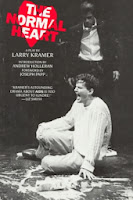
1989-In
Springfield Missouri a college production of "The Normal Heart" drew
strong protest, resulting in all eight performances selling out in four hours.
On opening night the theatre received bomb threats and the home of a supporter of
the production was destroyed by arson.
1990- A gay U.S. Army colonel was discharged and sentenced to 90
days in Leavenworth for appearing in drag at an AIDS benefit and kissing
another man.
 1990 Friday The
Bridge held a party at Club Detours at 32 Exchange Place Salt Lake City to
celebrate its first issue.
1990 Friday The
Bridge held a party at Club Detours at 32 Exchange Place Salt Lake City to
celebrate its first issue.
1991 V. Martel Anderson (1970 - 1991) committed suicide Bountiful
-- Vernon Martel Anderson, age 21, passed away October 26, 1991 at his home.
Born August 27, 1970 in Granger, He graduated from Bountiful High School in 1988. He attended the
University of Utah for 2 years. Was employed by A.R.U.P. [Associated Regional
and University Pathologists, Inc. laboratories at the University of Utah] and
enjoyed his work very much.
1992-Portland
Oregon police chief Tom Potter testified before a state senate committee,
saying many victims of anti-gay assaults do not report the crimes because of
fear that their identities will be made public.

1996 Awards dinner raises funds for coalition,
salutes `a lot of hard work.' THOSE WHO QUIETLY FIGHT AIDS BATTLE HONORED By
Jason Mathis, Staff Writer Honoring those who quietly serve was the theme of an
AIDS awards dinner Friday night at the Salt Lake Hilton.Close to 300 people
attended the 1996 Community Awards Banquet hosted by the People With AIDS
Coalition Of Utah. All proceeds go to helping people whose lives are impacted by
AIDS."I just wanted to do something about it," said Katherine Zimmer,
who bought a table with friends. "AIDS is such a frustrating thing. It's
completely preventable and yet it's such a tragic disease."The $45-a-plate
event is the coalition's major fund-raiser for the year. But it wasn't the main
purpose of the evening, said Don Austin, chairman of the planning committee."Not
only is this a fund-raiser for the coalition," he said, "but it's
really a celebration of people who are just putting in a lot of hard work
daily."Austin said this year's award winners were special because they
made a big impact without seeking any glory. Award recipients were honored for
volunteer work, compassionate medical assistance or because of sustained
financial and material contributions, Austin said.Terrlynn Crenshaw, Anne
Stromness, George Peppinger, Kindly Gifts, Steven Black, Richard Carter and Julie
Mohr all received awards. Cori Sutherland, director of the coalition, said they
hoped to raise $25,000 from the event.The non-profit coalition works with the
Utah AIDS Foundation to provide education and support services for
people impacted by HIV/AIDS. Forty to 50 percent of their funding comes from the
annual banquet, Sutherland said.The program included a silent auction, dinner,
award presentations and a speech by the Rev. Dr. Barbara King. Music
was provided by Elise West, who donated a portion of CD sales at the event to
the coalition.The banquet is held annually in conjunction with a conference on
living with AIDS. The theme of this year's conference is"healing is in
your hands" and will be held today and Sunday at Westminster College in
the Gore School of Business.
1
 |
| Deborah Dean |
997 Salt Lake Tribune Patty Henetz The Collision of Sex & Gender; Of Men,
Women, and Those Living Somewhere In Between; Women, men and the people living
in between- One night in 1970, when he was 19, Max Ganz
put on a wig, a dress and women's shoes and walked across his small Arkansas
town. He was fairly sure he was a transvestite. He fit the descriptions he had
read a couple of years earlier in Dick Tracy's Crimestopper Textbook and in a
magazine article that described new electroshock therapies designed to burn
away the horrid madness that drove men to dress like women. He had dressed in his sister's and mother's
clothing since he was a little boy. But never had he been so bold as to venture
outdoors. ``I'm walking across town, navigating from
shadow to shadow, hoping that no one would see me because they would probably
recognize me,'' says Ganz, which is not his real name. He still lived with his
parents. ``It seemed my dad's business associates were appearing at every window.
The Ku Klux Klan was just down the street. I thought if I was caught, the whole
world would collapse. Mr. Electroshock was waiting for me. I was basically in a
combat mode, facing the risk.'' Now middle-aged, Ganz heads An Engendered
Species, a Salt Lake City support group ``for those who travel freely between
Venus and Mars.'' The risk is still there, but now Ganz faces it with humor --
he took his female name, Deborah Dean, from a girl he dated in high school --
understanding and a desire to change social attitudes about those who cross
gender lines. While the group is open to anyone who likes
to wear the clothes of the opposite sex, the 35 members are all male. They are
professionals, blue-collar workers, semi-professional athletes and men in the
military. Ganz doesn't know the men's sexual orientations -- ``that's not
really what we're about,'' he says -- but he notes that sex researchers claim
80 percent of all cross-dressers are heterosexual. ``Usually, before they call us, they think
they are the only people on Earth who do this,'' says Ganz. ``We're pretty much
like square dancers or Shriners. We're just normal people, but we want to
express the women within.'' A group co-founder who goes by the name Aere
adds: ``For me, the genie is out of the bottle. Once you've experienced
freedom, it's hard to go back to repression.''
 |
| Add caption |
A few ``transgendered'' individuals are
entertainers, but most are average, private people. They range from those who
occasionally don clothing of the opposite sex to those who undergo extensive
sex-changing surgery. Bean Robinson, a professor with the University of
Minnesota Medical School's program in human sexuality, says one in 20 people
cross-dress. One in 30,000 adult males and one in 100,000 adult females have
had their sex changed surgically. Knowing the difference between sex and gender
is crucial to understanding transgendereds. Put simply, sex is biology, gender
is attitude. Sex is determined by chromosomes, hormones
and genitalia. Tradition says there are males, females and ``intersexed,''
those born in between. But Brown University geneticist Anne Fausto-Sterling
says sex is more extensive: ``Biologically speaking, there are many
gradations running from female to male; and depending on how one calls the
shots, one can argue that along that spectrum lie at least five sexes -- and
perhaps even more,'' she says. Gender variations are marked by manner and
behavior, mix-and-match modes of expression. People show this through their
clothes, cosmetics, hairstyles, body language and conversational style. Western society allows females far more
latitude in gender expression than males -- witness women's free adaptation of
menswear, for example. At the same time, certain behaviors such as directness
and overt independence are still labeled masculine in some communities and
cultures. Crossing sex and gender boundaries can be
risky, says Nancy Nangeroni. She is a board member of the Boston-based
International Foundation for Gender Education. ``Unfortunately, the transgender community
suffers from severe victimization,'' she says. ``Transgendered folk are much more
likely than others to commit suicide, to be murdered, to be fired from their
jobs, to be beaten up and to be hurt in many more ways, some as blatant as open
ridicule, some as insidious as nonhiring.'' Diagnosed With a Disorder: Critics say the
medical community has a hand in that victimization. They deny -- and resent --
the implication that something is wrong with them just because they can't be
shoehorned into a binary gender system. The Diagnostic and Statistical Manual of
Mental Disorders, the fundamental text for psychotherapists, labels some brands
of gender nonconformism as disorders. ``Gender dysphoria,'' for example, is
defined as a disturbance of gender identity, a sense of incongruity between
anatomical and psychological sex. Katherine K. Wilson of the Gender Identity
Center of Colorado in Lakewood, Colo., says that assuming transgendereds are
disordered legitimizes intolerance in the community, workplace and courts. That argument is giving shape to the
transgendered community's political awakening of the 1990s. It is reminiscent
of that in the gay community before 1973, when American psychiatrists and
psychologists declassified homosexuality as a mental disorder. The roots of this assertiveness reach back
nearly 30 years. In 1968, biochemical researcher Virginia Prince began
publishing her magazine,
 |
| Virginia Prince |
Transvestia. It was the first of its kind: a
non-erotic publication for cross-dressers and their spouses. In 1980, Prince joined with an organization
that came to be known as the Society for the Second Self, or Tri-Ess. It
primarily serves transgendered people who do not want sex-reassignment surgery. In 1987, the first International Foundation
for Gender Education conference convened. The organization, based near Boston,
covers the spectrum of the transgendered population: transsexuals,
cross-dressers, those who live as the opposite sex without surgery,
ungendereds, and their spouses and partners. Today, there are about 20 national
transgendered-education groups and many more local organizations providing
social and political support to this little-understood segment of society. The movement is a long time coming, says
Dallas Denny, who founded the Atlanta-based American Educational Gender
Information Service, or AEGIS, in 1990. ``When you get political, you get a great
sense of pride in yourself,'' says Denny, herself a transsexual. ``People
struggle with this, often for decades. It can't be cured. It is not a disease.
It is just a way to be human. People are just trying to live their lives with
dignity and respect for themselves.'' That isn't easy, given the truculence of the
defenders of gender polarity. To them, gender lines are clearly drawn: There
are women, and there are men. Ambiguity is unacceptable -- a soul-killing
dilemma for the many who don't fit easily into either mold. Aere, of An Engendered Species, notes that it
may be easier to come out gay than as a cross-dresser. And while transgendereds
and gay drag queens have been a staple of entertainment forever, their
acceptance -- even with gays and lesbians -- often stops at the stage. ``It's totally acceptable in the gay
 |
| Renee Rinaldi |
community to be a drag queen. It's almost mainstream,'' says Renee Rinaldi,
former executive director of the Utah Stonewall Center in Salt Lake City. ``But
the moment men dress like women in their own lives, the community is
uncomfortable.'' Somewhere In Between: The spectrum of gender
includes: -- Those who have always considered
themselves female, or male. -- Females who have thought of themselves as
men or boys. -- Males who have considered themselves
female. -- ``Othergendered,'' neither man nor woman
but some other gender. -- ``Ungendered,'' neither man nor woman nor
any gender at all. -- ``Bigendered,'' or gender-blended, male
and female at once. The term transsexual first gained wide
acceptance in 1953, when endocrinologist Harry Benjamin presented a paper at a
major medical conference on gender. Sex researcher Alfred Kinsey had coined the
term five years earlier, but it was Benjamin's paper and the subsequent media
popularization of the term that spurred medical and public recognition of
transsexuals as a category distinct from transvestites. Another significant event in transgender
history
 |
| Christine Jorgensen |
occurred in 1953: Ex-serviceman George Jorgensen went to Denmark for
sex-change surgery and returned as Christine Jorgensen, America's first
publicly recognized transsexual. Since then, those who believe they were born
in the ``wrong'' body have increasingly sought surgery to align their sexual
and gender identities. With other sex researchers, Benjamin
developed protocols for those seeking sex-change surgery. In 1979, the
attendees of the Sixth International Gender Dysphoria Symposium in San Diego
adopted guidelines under the lengthy name ``The Harry Benjamin Standards of
Care for the Hormonal and Surgical Sex Reassignment of Gender Dysphoric
Persons.'' The standards require an individual to be
evaluated psychologically, medically and socially for at least one year and
perhaps many more before he or she is deemed ready for the surgery. At the core of the standards is whether the
patient has had a persistent feeling of being in the wrong body. A
gender-disorder diagnosis is necessary. That doesn't sit well with some therapists,
such as Sheila Dickson, a Phoenix psychologist who says transgendered people
make up about a third of her clients. In fact, she says, the standards --
already revised three times -- are now undergoing further ``sweeping''
revisions. Dickson believes gender dysphoria is a
medical condition; at the same time, she counsels her patients to accept all
their gender aspects. ``I usually have to help them understand it
is not an either/or situation,'' she says. ``There is an amazing spectrum of
gender identities out there and how you want to express it and live it.'' Adds Dallas Denny: ``The process of sex
reassignment, which has moved people inevitably toward surgery, is right for
some people but not for others. A lot of people want to live as transsexuals
without surgery for a variety of reasons.'' Ambiguous, With Attitude: A politically
emergent group questioning the value of sex surgery is intersexuals, those born
sexually ambiguous. This obscure population gained visibility this year after
the publication of an account in The Archives of Pediatric and Adolescent
Medicine that challenged long-held assumptions about the relationship between
culture and gender. In 1973, sexologist John Money of Johns Hopkins
University in Baltimore published a report about an infant boy whose penis
accidentally was cut off. Surgeons created ``female'' genitalia for the child
and she was reared as a girl, ``Joan,'' ignorant of her sexual beginnings. In
his account, Money exhibited the case as proof that infants are sexually
neutral at birth and that sexual identification is acquired, like language, in
early childhood. It turned out, though, that at age 14
``Joan'' denied her female identity, became ``John'' and eventually underwent
surgery to try to restore the lost genitals. In April this year, Milton
Diamond, a physician with the University of Hawaii-Manoa in Honolulu, and Keith
Sigmundson, a doctor with the Ministry of Health in Victoria, British Columbia,
published their follow-up on ``John/Joan'' that refuted Money's earlier
assertions. The two physicians suggested that rather than
resorting to immediate sex-assignment surgery, intersex children should be
allowed a say in what, if any, surgery to have. That also is the position held by the San
Francisco-based Intersex Society of North America, a support group founded four
years ago for intersex people, many of whom had genital surgery without
informed consent. According to ISNA, one in every 2,000 babies
is born with ambiguous genitalia, and more than 2,000 surgeries are performed
each year in the United States to assign a sex to intersex patients. Geneticist Anne Fausto-Sterling says
intersexuals fall into three categories: true hermaphrodites, who have both
testicular and ovarian tissue, often due to abnormal chromosomes; female
pseudohermaphrodites, genetic females whose external sex organs appear
masculine after prenatal exposure to testosterone; and male
pseudohermaphrodites, genetic males who don't become fully masculine, either
because they didn't produce the necessary hormones or because their tissues
didn't respond properly to hormones while still in the womb. When these babies are born, the surgeons move
in. The general policy has been to proceed with sex-assignment surgery as soon
as possible so the child does not have to experience ambiguity. According to
ISNA, about 90 percent of the time, the child is made female because surgeons
find it easier and more acceptable to make a small penis into a clitoris than a
large clitoris into a small penis. This attitude angers ISNA. Executive director
Cheryl Chase says, ``Genital surgery damages sexual function, compounding the
difficulty of being different in the first place.'' Calling themselves ``Hermaphrodites With
Attitude,'' ISNA members have posted their stories on the Internet. The first
large group of intersexuals who received early childhood surgery are now
reaching their 40s. Their activism has prompted pediatric urologists to rethink
their views on early sex-assignment surgery. They also are asking the
fundamental question: Just how do we define ``male'' and female''? Dictionaries say females bear young, males
beget them. The definitions also say males and females are those who have male
and female qualities. But, of course, there are females who don't
have children and males who don't beget them. And all people are made up of
``male'' and ``female'' qualities. So it is fair to say that all people are
transgendered. And while those who undergo sex-change
surgery to live as the opposite gender are regarded as sexual radicals, they
also are deeply conservative. No one goes to greater lengths than they to
square sex with gender. To Change or Not: A segment of the
transgendered community is taking issue with the idea that a person can be
``born into the wrong body.'' That attitude, the critics say, reinforces the
assumption that sex and gender can only be binary. To them, no body is
``wrong,'' nor should people have to hew to a gender identity, a gender role or
a sexual orientation based on their genitals. Scott Gerdes, a 43-year-old female-to-male
transsexual, counters that such political arguments are pointless and divisive.
``I don't appreciate it when I hear people put down surgery and those of us who
want it. If I want to, let me. It's personal,'' says Gerdes, a spokesman for
the International Foundation for Gender Education. ``We just want to blend in
and live.'' For Gerdes' colleague Nancy Cain, blending in
has gotten easier since she began taking hormone shots and living full time as
a woman. But the 43-year-old has yet to decide how far to go with her
transformation. Born a boy, ``I knew I was transsexual at
19,'' Cain says. ``I just stayed drunk for years and didn't deal with it.'' As with many transgendereds, middle age
forced a change. ``I lost my job, I had to get glasses and I thought, `Screw
it. I might as well live as a woman,' '' she says. Cain still has male genitalia. She identifies
as a bisexual, but lived as a gay man for about 10 years. She now lives with a
woman who once was her wife -- but that was when Cain was living as a man and
cross-dressing. ``I often ask myself, `What am I doing?' ''
says Cain. ``If I'm going out with a woman, does that make me a lesbian or a
heterosexual? I don't know.'' Cain has been on hormones long enough that
she definitely looks like a woman. She says she is terrified of
sex-reassignment surgery, but hasn't totally ruled it out. For her, being able
to ``pass'' without being ``read'' -- that is, without onlookers realizing she
is a man in a dress -- may be enough. Not so for Gerdes. Born a girl, he was
suicidal as a teen-ager because he couldn't reconcile his brain with his body.
``I was afraid to tell anybody,'' he says. ``I thought they would toss me in
the loony bin.'' At 26, he came out to his family. ``I said,
`I know this is going to be strange to hear. But I have felt male as long as I
can remember. And I have recently found out there is something I can do that
will help me, physically and mentally. And that is what I'm going to do.' ``I made sure they all knew it wasn't their
fault, that it was a good thing that would help me. I remember my dad looking
at me, looking at the ground, looking at me, then saying, `Well, if that's what
you have to do to be happy, go ahead.' My mom said, `But you're such a pretty
girl.' '' Gerdes has legally been a man for 11 years.
He had his first surgery three years ago, and will definitely go all the way. ``That's right for me, but not for
everybody,'' he says. ``If I needed a third ear to be male, that's what I would
have. It happens to be a penis. It doesn't have a personality. It's not a
choice. It's not a like or dislike. I would just feel more complete. ``People are afraid to look at that,'' says
Gerdes. ``I'm not sure of what they are afraid of. Living without being true to
yourself is hell.''
1997 A brief history of
transgenderism Salt Lake Tribune PATTY HENETZ Some of the
earliest accounts of transgenderism are from ancient Greece and Rome. The Roman
emperor Nero is said to have married a castrated slave after murdering his
pregnant wife. In Greek myths, males are turned to females for punishment,
though the punishment is of questionable value since the transformed women
report greater sexual pleasure in their new roles. Transsexual priestesses
known as gallae served a female Phrygian deity believed to date back to the
Stone Age. North American Indian tribes traditionally have been tolerant of
cross-gendereds, known as Two-Spirits. Many African tribes have worshiped
intersexual deities, and male-to-female shamans have been documented in South
America. Evidence of Amazon warriors has been found in Asia. And transgendered
political groups such as the Welsh Rebeccas and the Irish Molly Maguires were
peasant militants. Perhaps the most famous transgendered person is Joan of Arc,
the 15th-century insurrectionist called homasse, a slur meaning masculine
woman. At age 17, dressed in men's clothing, Joan led her peasant army in a
rout of the English from what would become the liberated nation-state of
France. At English urging, the Roman Catholic Church condemned Joan for her
paganism -- and her cross-dressing, which particularly provoked Grand
Inquisitors. Told she could not attend Mass before her execution unless she
wore women's clothes, Joan agreed. But for some reason -- historians say guards
may have hidden her female attire to sabotage her -- Joan wore men's clothes.
The priests, deciding Joan was a witch trying to appropriate the power of men,
set her on fire. On May 30, 1491, she was burned at the stake. Afterward,
bystanders raked her charred clothing off her corpse to see that she was indeed
female. Rudolf Dekker and Lotte van de Pol, scholars at Erasmus University in
Rotterdam, argue that in early modern Europe, women who dressed like men were
not merely curiosities but rather part of a deeply rooted tradition, especially
in the Netherlands, England and Germany.
To pass themselves off as men was an option for women who had fallen onto bad
times, wanted to enlist in the army or wanted to marry other women. By the
close of the 17th century, cross-dressers in England were publicly humiliated,
hanged or both. But in 18th-century France, a member of Louis XV's court lived
his first 49 years as a man and her last 34 years as a woman. While many
believed the Chevalier d'Eon -- sent on spy missions to Russian in the guise of
a woman -- was born female, an autopsy showed him to be a biological male. In
1953, ex-serviceman George Jorgensen went to Denmark and came home to America
as Christine Jorgensen, media sensation. By the 1980s, the public embraced
androgynous stars such as David Bowie, Boy George, Prince, Grace Jones and
Madonna. Yet jazz musician Billy Tipton, a woman who lived as a man, died in
1989 of a bleeding ulcer rather than go to a doctor who might reveal his secret
-- which a coroner did instead. From Shakespeare to Mrs. Doubtfire, from Little
Richard to RuPaul, the stage has been the safest public space for
transgendereds and those acting like them. For nearly 20 years at midnight
showings of ``The Rocky Horror Picture Show,'' moviegoers worldwide have
dressed in costumes to celebrate Frank N. Furter, the sweet transvestite from
Transsexual, Transylvania. In Salt Lake City, the annual Royal Court of the
Golden Spike Empire drag ball nets some $20,000 a year for AIDS charity and
scholarships, says Jeff Kosewski, Royal Court emperor and organization
co-president. The ball, once underground, now convenes in the Salt Palace; two
years ago, ballgoers peacefully shared the Palace with a massive bowlers'
convention. But even such generally accepted transgender activities have their
critics. According to an unsigned article in the November 1995 issue of The
Journal of Gender Studies, drag performances are little more than gender
minstrel shows that debase women by endowing them with artifice and then
belittling it. ``Breasts, elaborately coiffured hair, exaggerated make-up and
mannerisms are deployed as props in a performance,'' the author says. ``The man
in a frock looks preposterous, but this is just a shadow of the essential
preposterousness of the female body itself.'' "This last paragraph can be
true, but women can also be honored, It depends upon how one does it" --
Deborah Dean
1998 The LDS
Church gave $600,000 to the political-action group Save Traditional Marriage
’98 according to a report in the Honolulu Advertiser.
2003 SUNDAY Gay Navajos are
walking a cultural tightrope By Leslie Hoffman The Associated Press WINDOW ROCK, Ariz. -- Darrell Joe sits across
the table over a Denny's breakfast, cup of coffee in hand, rattling off
projects he is working on and programs he wants to start in his new job with
the Navajo Nation's AIDS office. He is a respected 30-year-old professional in
a high-profile position, his calendar filled with meetings and conferences.
There is an ease in his voice. He knows who he is and what he wants. He is
happy. But it wasn't always like this.
Joe remembers when his journey began: when he and his cousins, playmates
growing up in the small Navajo community of Iyanbito, N.M., went off to
school. That's when other kids
started hurling words like "fag" and "queer" at him. Soon,
some of his cousins were embarrassed to be seen with him. "That's when I
started to think, 'OK, I'm different.' I couldn't figure it out, and I think
that's when I started pretending that I lived in certain worlds," he said.
His search for a place to belong both as a gay man and as a Navajo would take
him far from his home and his culture to an urban existence in Western society
-- and back again. Joe is one of the growing number of gay, lesbian and
bisexual Navajos walking a cultural tightrope, uniting elements of Navajo and
Western culture to

establish a place for themselves. "They sort of had to create their own
world," said Wesley Thomas, an assistant professor of anthropology at
Indiana University who specializes in American Indian gender studies. The
modern view of homosexuality in the Navajo Nation is shaped both by tribal
tradition and Western influence, according to Thomas. Navajo origin stories
embrace the idea of cross-gender identities. In some of these stories, men with
feminine characteristics are known as "nadleeh" -- they dressed like
women and were considered important religious figures with a special role in
ceremonies. They also shared in conventional female duties, such as cooking or
caring for children. In Navajo tradition, sexual relationships between nadleeh
and non-nadleeh men were considered heterosexual. "In the Western gay
culture, you have men who look like any other guy and behave like men and
that's their identity as a gay male," said Jack Jackson Jr., a gay Navajo
who serves in the Arizona House of Representatives. "On the reservation .
. . you see a lot of gay men who look more feminine and act more feminine, and
it seems it's from their upbringing in a more traditional way." A modest
number of nadleeh have lived openly as transvestites on the reservation for
generations, said Harry Walters, an anthropologist who teaches Navajo culture
at Dine College in Tsaile, Ariz. Some in the community now see
"nadleeh" as an early manifestation of homosexuality, and use it as a
broad term for anyone who isn't heterosexual.
Yet Thomas and Walters said the traditional understanding of nadleeh is
disappearing, in part because the cultural significance has not been passed
from one generation to the next -- but also because of changing attitudes. With the arrival of Western religious
influences, Navajo families began to hide away homosexual relatives or encourage
them to live a heterosexual lifestyle, Thomas said. "The nadleeh were very
much a part of Navajo culture right into the late 1800s," said Thomas, who
is also a gay tribal member. "Now we have children and grandchildren who
dismiss [nadleeh] as part of Navajo culture. It was . . . relegated to
something that was part of Western culture and not Navajo. "There is now a search by these
Navajo gays and lesbians to find out who they are," he said. With that search has come an attempt to
organize. Melvin Harrison, head of the Chinle-based Navajo AIDS Network, said
there wasn't a community for homosexual, bisexual or transgender Navajos when
he began HIV prevention work on the reservation in 1988. "Ten years ago,
15 years ago, there was no place for these individuals to go," Harrison said.
"That's the big change I've seen is that we have people who come to our
office just to get a hug, to laugh, to wear makeup. Then they wash up and go
home and be their other selves." To celebrate National Coming Out Day
earlier this month, the network's office in Gallup, N.M., organized a
coming-out party at a nearby state park. More than 50 people showed up for the
third annual event, which included a drag show and a dance. No one can remember
a formal organization that served homosexual, bisexual or transgender Navajos
before the network's formation in 1990. Homosexuality is simply not discussed
within the traditionally discreet Navajo Nation. "It's always been
accepted, but deep down it's seen as something that's not normal," Walters
said. Some credit the traditional nadleeh teachings for greater tolerance among
older generations. Joe said his grandmother, for instance, always knew he was
different but never judged or ostracized him. Still, the homophobic attitudes that first
emerged with the decline of the nadleeh persist today, although tribal members
disagree to what extent. Pernell Sam, a
transgender Navajo from the small town of Many Farms near Chinle, said the
2-inch scar on his back is painful proof. The 28-year-old was stabbed at a
party seven years ago by a man who he said used to call him "fag" and
"queer" in high school.
"They never caught that guy," Sam said. "I still see him
around." Countless tribal members
stay in the closet, fearing that kind of backlash, Harrison and others said. As
a result, it's hard to know just how large the gay community is on the
reservation. As a young man, Joe was
simply too afraid of the reaction he might get from friends, classmates and
others if he came out. A cross-country athletic scholarship to college in Idaho
was his ticket away from the reservation. Eventually, Joe set out for San
Francisco. There, a stint as a volunteer with an AIDS prevention organization
led to a career. But something was still missing. "I was living in two
worlds," Joe said. He returned to Gallup, eager to reconnect with his
culture and help the local AIDS prevention effort, using models from his work
in San Francisco. That work led to the Naa Ts'iilid Hozho, or Beauty Rainbow
Project. The HIV prevention group, which is part of the Navajo AIDS Network,
targets the homosexual, bisexual and transgender community. The rainbow is a
symbol in both Navajo religion and the Western gay movement. Beauty Rainbow
Project is both a public health effort and an important support network.
"As far as the gay community on the Navajo reservation, we're it,"
said Marco Arviso, who heads the group of about 20 people. Pernell Sam said he
revealed his identity 10 years ago and will not go back in the closet.
"It's too hard," he said. Sam is dressed in a plain gray cotton top
and white pants, his face flawlessly smooth with strong feminine lines defining
his cheekbones -- all changes from hormones he's taking in the hopes of someday
getting a sex change. His personal mission is to help other Navajos understand. "I have nothing to hide," he said.
 |
| Dieter Uchtdorf |
2010 High-ranking LDS leader weighs in on same-sex
attraction By Peggy Fletcher Stack The Salt Lake Tribune Dieter F. Uchtdorf of the Quorum of the Twelve Apostles,
waves to the crowd after the afternoon session of the 180th Semiannual General
Conference of The Church of Jesus Christ of Latter-day Saints Saturday, April
3, 2010. Mormons may not know until the hereafter what causes same-sex attraction,
but “God loves all his children” and expects everyone to do the same, an LDS
Church leader said Sunday. While the message — delivered to more than 200,000 Utah
Mormons — may not seem significant, the messenger was. As second counselor in the governing First Presidency,
Dieter F. Uchtdorf is one of the highest-ranking leaders in the hierarchy of
the nearly 14 million member Church of Jesus Christ of Latter-day Saints to
address the thorny topic of whether same-sex attraction is inborn. The gentle tone and emphasis of Uchtdorf’s remarks — spoken
at the Conference Center in downtown Salt Lake City and beamed to dozens of
church buildings — came in the wake of an earlier speech by Boyd K. Packer,
senior member of the LDS Quorum of the Twelve Apostles. In Packer’s original General Conference speech earlier this
month, he said, “Some suppose that they were pre-set and cannot overcome what
they feel are inborn tendencies toward the impure and unnatural. Not so.” Packer later changed “tendencies” to “temptations” on the
church’s website. Still, Packer’s speech generated national controversy and
protests from those inside and outside the Salt Lake City-based faith, many of
whom saw the apostle’s statements as contributing to the self-loathing and suicides
of gays. In response to the outcry, LDS spokesman Michael Otterson
issued a strongly worded condemnation of bullying and belittling of gays,
saying, “Their struggle is our struggle.” On Sunday, Uchtdorf reiterated the church’s position that it
doesn’t know the cause of homosexuality and that it doesn’t matter. “Many questions in life, however, including some related to
same-gender attractions, must await a future answer, even in the next life,”
Uchtdorf said. “Until then, the truth is, God loves all his children, and
because he loves us, we can trust him and keep his commandments.” Some audience members welcomed Uchtdorf’s approach, which
seemed more consistent with the church’s position. “It seemed fairly close to the line we’ve been getting lately
— the idea that the practice is sinful, but homosexual tendencies are
acceptable within the church as long as people don’t act on them,” said Jennie
Pulsipher, a Mormon who watched the regional conference via satellite at her
east-side Salt Lake City stake center. “He also emphasized that [gays] should
be treated lovingly as children of God.” Ty Mansfield sees
 |
| Ty Mansfield |
Uchtdorf’s remarks as representing the
church’s future. “We’re going to be hearing more and more statements like
this, calling church members to a greater expression of compassion and
kindness,” said Mansfield, who writes at northstarlds.org, a website for
believing Mormon gays. “Doctrine will remain the same, but we’ll see a pretty
radical shift in the culture of the church in how we relate both to the issue
of same-sex attraction and to those who experience homosexual feelings. We’ve
made some significant strides over the last few years, and I think this is only
the beginning.” Though he wasn’t in the audience, Brigham Young University
microbiologist Bill Bradshaw was pleased to hear of Uchtdorf’s remarks. “I totally agree that no matter what the cause or what we
eventually find out is the definitive explanation, it doesn’t alter our
opportunities nor obligations to treat our gay brothers and sisters like
everyone else — with Christian kindness,” said Bradshaw, who, with his wife,
Marge, directs Family Fellowship, a support group for LDS parents of gays and
lesbians. That compassionate approach, he said, “resonates with me.” Yet Bradshaw, who has a gay son, believes a wait-and-see
approach to causality belies a mountain of scientific research. “I have spent a long time investigating the published
evidence from empirical studies, and I know that the overwhelming evidence
strongly favors the position that sexual orientation is
 |
| William Bradshaw |
programmed by
biological mechanisms,” he said. “The evidence that it’s a choice or that it’s
programmed by social or psychological forces is lacking.” On Monday, Bradshaw lectured about the topic in a BYU
bioethics class, explaining all the research he has uncovered in recent years. The question of cause inevitably leads to the next question
— the issue of change, he said. “The evidence shows overwhelmingly that
orientation is not amenable to change.” During Sunday’s wide-ranging address, Uchtdorf did not
mention the issue of same-sex attractions changing or anything else related to
the issue. But the German leader did allude obliquely to the question
of immigration by calling himself a “legal alien.” He thanked Utahns for welcoming him and his family to the
Salt Lake Valley in 1999 when he was called for an “overseas assignment,” but
he expected to return to his home in Europe one day. Then, in 2004, he became
an apostle, a lifetime position. He and his wife, Harriet, realized, he said,
that “the ‘Wild West’ was now our final destination.” “You are and have been for generations wonderful examples,”
he said, “of integrating foreign people into your neighborhoods and
communities.” Utah’s dominant religion hasn’t taken a definitive position
on the immigration debate. Instead, LDS leaders have called for “compassion”
and encouraged “careful reflection and civil discourse” when discussing the
issue.
2015 Marian Edmonds-Allen resigns as Utah Pride Center director

When Marian Edmonds-Allen was chosen to be the executive director of the Utah Pride Center, which has been struggling with personnel, financial and public perception issues, a squeal and a collective sigh of relief could be heard from Utah’s lesbian, gay, bisexual, trans* and ally community. Community leaders expressed hope that she could bring the Center to new heights, as she did with the Ogden OUTreach Resources Center a few years ago. In the past three months since her selection, her calendar has been full of meetings with community stakeholders, members of the community, press and anyone who had an idea to share. Today, she gave notice of her resignation, effective immediately. “After an 11-week assessment of the Utah Pride Center, it is my recommendation that it be predominantly community-led and operated,” Edmonds-Allen said. “To prolong existing resources for the benefit of the community, I have recommended that the executive director position be eliminated.” The board of the Center is still determining what are their next steps. “When Marian accepted the position, the board was very clear about the status of the Pride Center in terms of tasks at-hand around programming, financial status, fundraising, the Pride Festival, capital campaign, board development … all of those things,” said board chair Kent Frogley. “We had communicated those things at a 30,000-foot level. Marian came in, dug deeper into those, and assessed and evaluated what needed to be done and presented us with a fairly comprehensive statement on where she thought greater focus and greater resources needed to be brought to bear. At the same time she indicated that she made the decision that she didn’t want to take that task on.” “We are disappointed,” Frogley continued. “She had made a lot of progress with a lot of the stakeholders of the community who partnered with the Pride Center. People responded to her very positively, as the board did. We are disappointed that she ultimately decided it was something that she wasn’t willing to do.” At a rebranding ceremony at the Pride Center on National Coming Out Day Oct. 11, Edmonds-Allen was given a long standing ovation. She didn’t, however, give her talk on the future of the Center, as promotional material had indicated. That might have been, however, because the event went an hour longer than anticipated. In an August interview with QSaltLake, Edmonds-Allen’s stated her vision for the Center that could be summed up with one word: Extension. She wanted to extend people’s knowledge about the Center; to extend the hand of cooperation and collaboration to other LGBT-centered partners and others in the broader community; and to extend the Center’s role both in effectiveness and geographic reach. Community Liaison & Volunteer Manager Jimmy Lee also left last Friday, after being with the Center since December, 2012. “It’s been a great process of learning and unlearning as I’ve engaged in this work,” Lee said.
2015 Ex-Utah Pride Center director’s resignation letter alleges financial troubles, struggles with board Marian Edmonds-Allen Resigned as executive director of the Utah Pride Center
By Jennifer Dobner The Salt Lake Tribune Published: October 27, 2015 Surprise move • Marian Edmonds-Allen held the leadership position for just 11 weeks. A resignation letter from the former executive director of the Utah Pride Center describes a rocky relationship with the board and concerns for “unsustainable operating conditions” that she says leave the resource for the gay and transgender community on shaky ground. Those conditions include: “financial crisis, lack of support from donors, absence of development programs or plans, lack of strategic planning and the dismal state of the programs and services of UPC,” according to the resignation letter of Marian Edmonds-Allen. She resigned abruptly Monday after 11 weeks on the job. The decision “blindsided” the board, but the breadth of the center’s challenges are not a surprise to anyone, board president Kent Frogley said Tuesday. “This was all stuff we told her when she started in August,” he said, adding that the board believed it had set out specific goals for a variety of center needs, including fundraising, development, hiring priorities, programming and increasing the profitability of the annual Pride Festival. “I would be the first to admit that the challenges facing the Pride Center are not easy things,” said Frogley. “But we try to be as positive and as clear as we can about the things that need to be done.” Despite her short tenure, Frogley said Edmonds-Allen had made great strides, including launching a new website, initiating new community outreach and overseeing an effort to make the Salt Lake City center more inviting. “The feedback from everybody about her was really positive,” he said. “They like her energy … she’s great.” Edmonds-Allen — a former pastor and a longtime gay- and transgender-community advocate who ran a drop-in center for LGBT teens in Ogden and worked with national Family Acceptance Project — was hailed for her reputation for collaboration when the board selected her in July. The choice followed two years of tumult for the center, which lost a previous director amid allegations of financial mismanagement — later determined to be unfounded — and saw numerous other staff changes, including two interim directors. Edmonds-Allen could not be reached for comment on Tuesday, but in a Facebook post, she said she had recommended the board move ahead by terminating the executive-director position and allow the center to be community-led and operated. To me, community comes first, period,” she said in the post. Frogley doesn’t think such an elimination is viable. The busy center, he said, supports many constituencies, and “you have to have somebody to keep the wheels on the bus.” A difference in communication and/or working styles may be at the heart of the split, Frogley said. In her letter, Edmonds-Allen says the board had been verbally supportive and provided some direction, but had also acted to undermine moves aimed at ensuring the center’s stability. The board also failed to respond quickly to security concerns stemming from the discovery that the center bookkeeper had been accused in a civil lawsuit of embezzling more than $200,000 from a previous employer, she said. Frogley disputes the characterization of the board, and his policy is to provide direction and “then get out of the way.” He also said that while there was some lag time between the notification of the bookkeeper’s troubles and the woman’s firing, it’s because information was being gathered about the allegations. “I think [Edmonds-Allen] honestly brought her best game,” Frogley said. “And whatever communication issues there were ultimately resulted in a decision that it was better to get out rather than drag something out that you knew in your heart isn’t a fit.”

.jpg)


.jpg)

 2005 Transgender Community
Meeting: GLBT Community Center's Multi-Purpose Room Thursday, Please come to this community meeting
where we will discuss the Transgender resources and groups already available in
the community, where the gaps in services lie, and how we can go forward in a
more unified manner to begin to address these needs. Please help me spread the
word to all the people you know!
2005 Transgender Community
Meeting: GLBT Community Center's Multi-Purpose Room Thursday, Please come to this community meeting
where we will discuss the Transgender resources and groups already available in
the community, where the gaps in services lie, and how we can go forward in a
more unified manner to begin to address these needs. Please help me spread the
word to all the people you know!.jpg)